

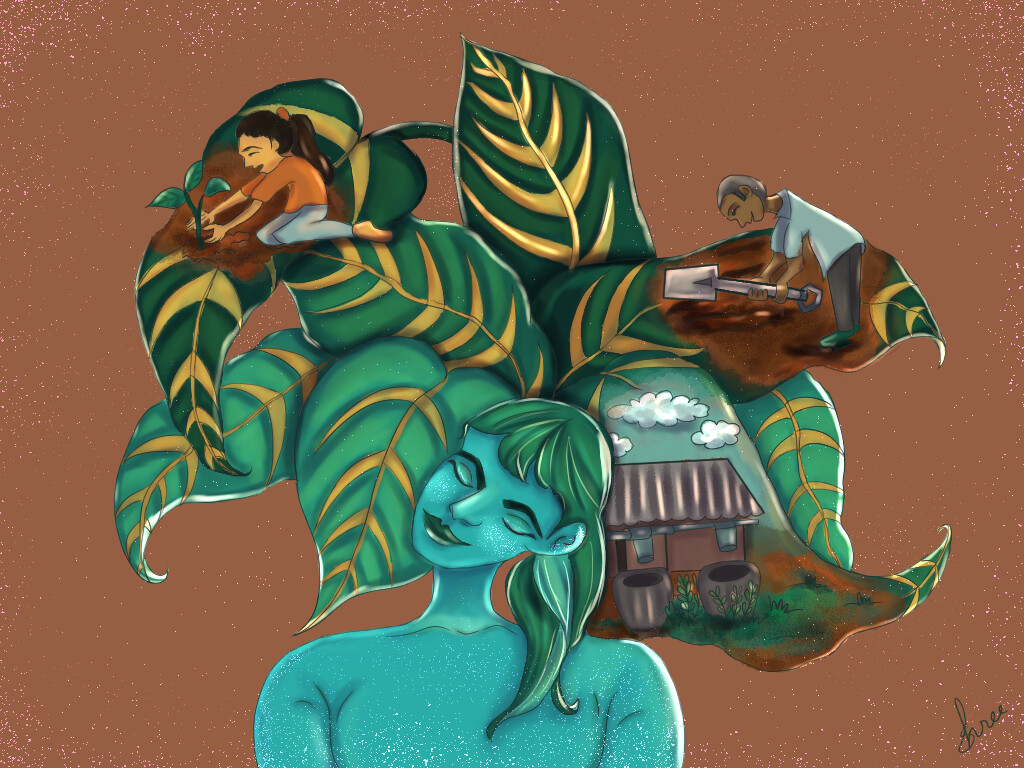
Halma: A Bhil blueprint for collective action on climate change

As the world grapples with intensifying floods, droughts, and food insecurity, a growing consensus has emerged among experts: top-down, technocratic solutions to climate change are insufficient. In this urgent quest for sustainable and equitable disaster recovery models, Halma, a centuries-old practice from India’s Bhil tribe, offers a compelling, community-driven framework for climate adaptation, resilience, and ecological restoration.
Rooted in the cultural traditions of Madhya Pradesh’s Bhil communities, Halma exemplifies how Indigenous knowledge systems can provide transformative lessons for rebuilding not just ecosystems but entire ways of life.
Essence of Halma
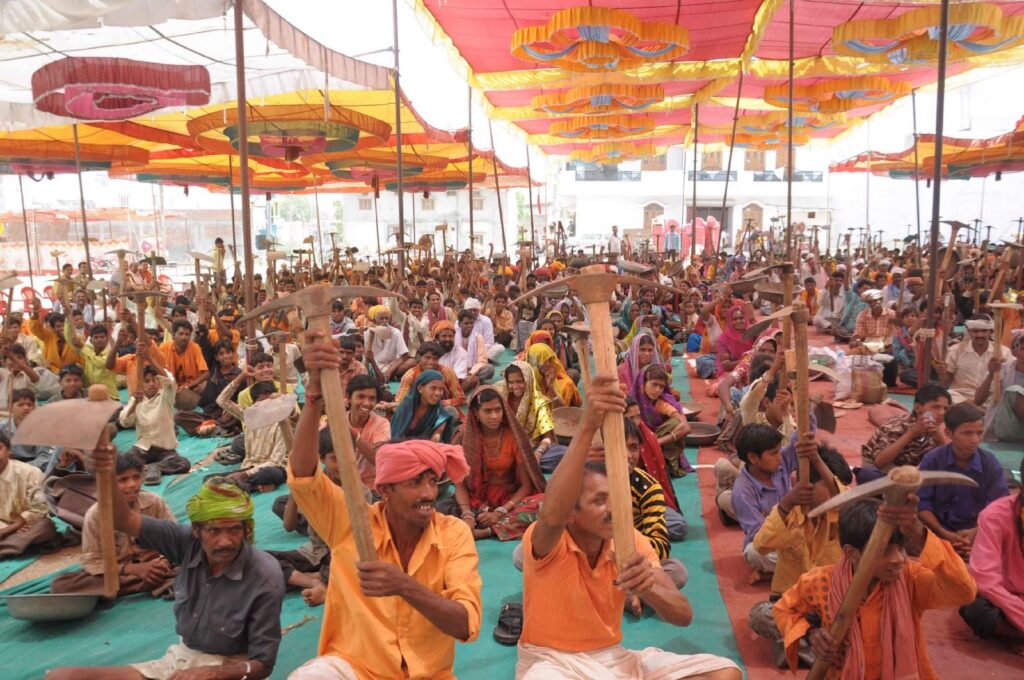
At its heart, Halma represents a profound tradition of voluntary collective labour. The term itself, meaning “a call for help,” reflects a deeply ingrained philosophy of mutual aid, reciprocal responsibility, and community solidarity that permeates Bhil society.
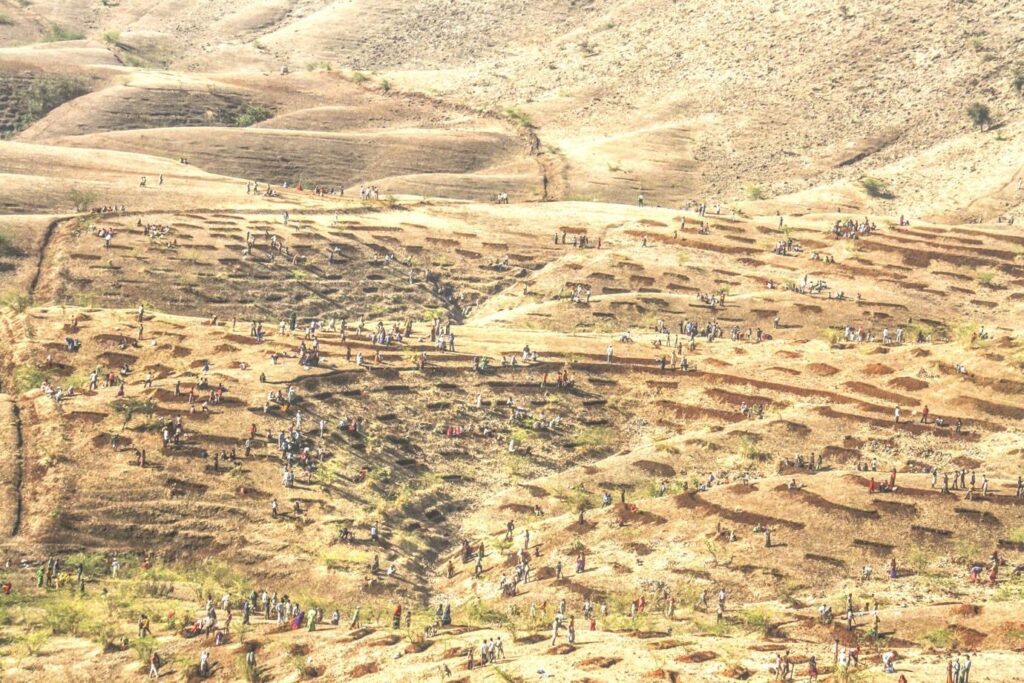
When an individual or family faces a significant task be it constructing a home, repairing agricultural embankments, restoring a water body, or organizing a major communal event they invoke Halma. In response, scores, sometimes hundreds, of community members assemble, bringing their own tools, food, and labour, and work collectively until the task is accomplished.
No monetary compensation is expected. Participation arises not from obligation enforced by external authority but from ethical commitment, ancestral values, and the assurance that when needed, the favor will be returned. In doing so, Halma sustains social cohesion, redistributes labor during critical times, and crucially, strengthens the community’s resilience to environmental and economic disruptions.
Halma as Environmental Stewardship
In recent years, Halma has been revitalized as a powerful instrument of environmental restoration, in the district of Jhabua, Madhya Pradesh. With the support of organizations like Shivganga, Halma has been leveraged to address environmental degradation through:
- Restoration of traditional water bodies
- Afforestation of barren hills
- Construction of contour trenches for rainwater conservation
- Revitalization of biodiversity and soil health
During Halma 2023:
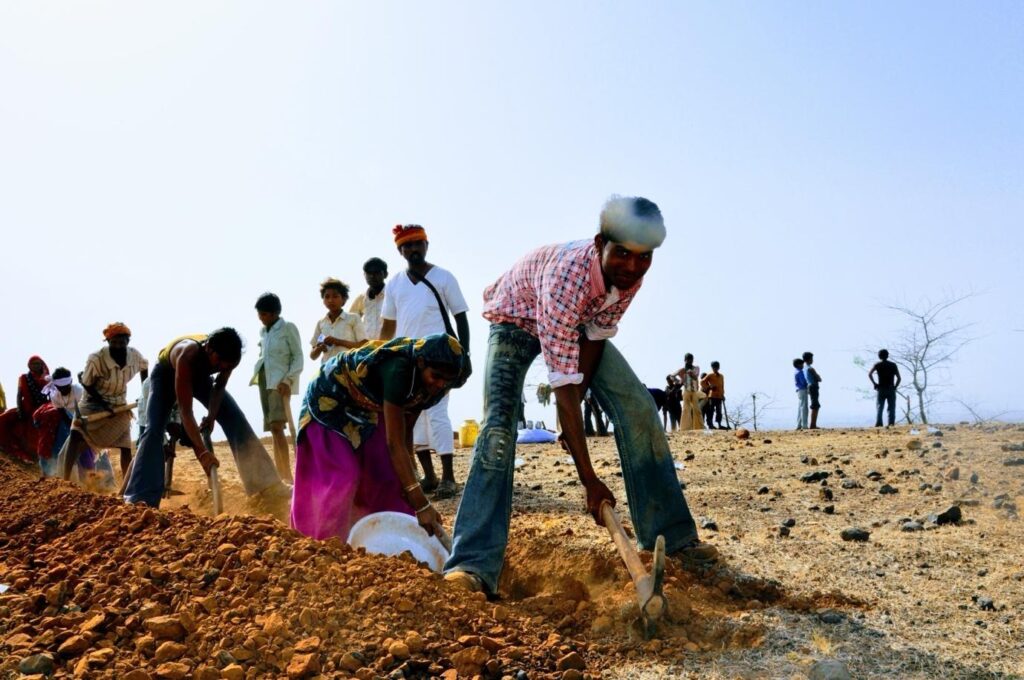
- Over 40,000 Bhil villagers from more than 1,500 villages participated.
- Approximately 100,000 contour trenches were dug across hillsides.
- These initiatives aimed to conserve an estimated 60 crore litres of water annually, significantly replenishing groundwater tables and revitalizing agriculture.
The impact is tangible: once-desolate hills now bear green canopies, dried-up wells flow again, and communities once driven to migrate by environmental collapse are returning to cultivate a diverse range of crops.
Cultural dimensions
Halma is not merely an ecological intervention, it is a cultural and spiritual event. The collective labour unfolds alongside:
- Rituals honouring ancestors and the spirit of the land
- Storytelling sessions wherein elders recount the histories of ecological stewardship
- Songs, dances, and feasting that strengthen communal bonds
Thus, Halma does not only regenerate landscapes; it also revitalizes cultural memory and spiritual resilience, fostering a profound sense of belonging to the land, to one another, and to generations past and future.
In contrast to dominant climate strategies characterized by carbon markets, biodiversity banking, and green finance mechanisms Halma offers a radically different vision. While global systems often commodify nature into “carbon credits” and “ecosystem services,” Halma reaffirms that land is not an asset to be traded, but a relative to be nurtured.
Localized, bottom-up action
During Halma 2023, villagers across Jhabua spontaneously mobilized — without directives from governmental bodies or external NGOs — to implement large-scale ecological interventions.
- No consultancy firms
- No expensive project tenders
- No bureaucratic delays
Villagers identified critical sites, coordinated resources, and executed restorative activities grounded in local knowledge and collective decision-making.
Every Halma effort is organized autonomously at the village level. Through open assemblies (Gram Sabhas), decisions are made collectively, ensuring the voices of elders, women, and youth are heard. Leadership arises organically, based on trust, reputation, and demonstrated service. This model ensures:
- Flexibility: tailored to local needs
- Ownership: deep communal investment
- Accountability: shared responsibility across participants
It stands in stark contrast to centralized, top-down policies, often detached from ground realities.
Sustainability rooted in moral inheritance, not economics
In Halma, environmental care is animated by an ethical and spiritual mandate, not by economic incentives. Villagers work not for financial reward but to uphold:
- Reciprocity: “Today I help you; tomorrow, you help me.”
- Stewardship: “We belong to the land, not the other way around.”
- Intergenerational Responsibility: “Our descendants must inherit a flourishing earth.”
In stark opposition to market-driven offsetting schemes, Halma frames conservation as a sacred relational practice.
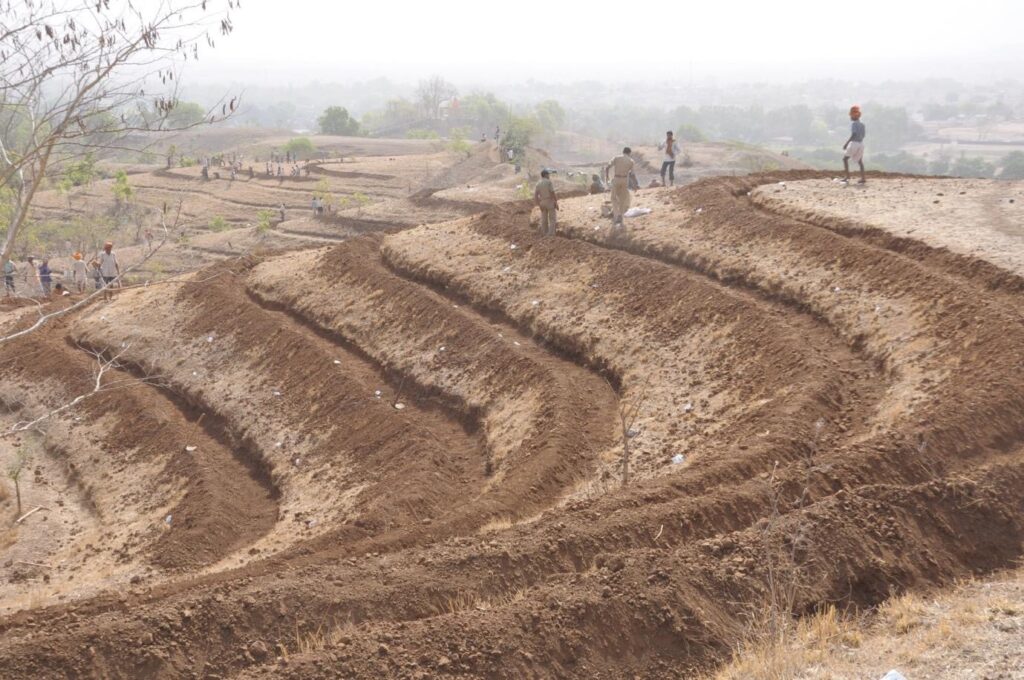
In Halma events, trench-digging becomes more than a technical task. It is a generational ceremony, where:
- Elders teach younger members traditional land-care techniques.
- Families work side-by-side, sharing stories and songs.
- Labor becomes an act of communal celebration, not exploitation.
Restoration is thus an act of memory, love, and collective survival.
In Halma, every action is an offering:
- An homage to ancestral wisdom
- A fulfillment of present responsibilities
- A gift safeguarded for future generations
Climate action here is not a transactional investment, it is a moral inheritance, passed from generation to generation.
Global Relevance: Why Halma matters beyond India
Halma compels the world to rethink climate resilience not as a domain monopolized by technology and finance, but as a practice deeply rooted in mutual aid, solidarity, and reverence for the Earth.
In the greened hills of Jhabua, a vision of climate action where:
- Disasters are mitigated through collective solidarity
- Indigenous lands are protected, not exploited under the guise of “green colonialism”
- Multiple ways of knowing beyond Western science are honoured and integrated
Halma teaches that healing ecosystems must be inseparable from healing communities. However, despite its immense promise, traditions like Halma face existential threats:
- Erosion of tribal knowledge due to modernization and displacement
- Policy neglect of community-led governance structures
- Marginalization of tribal voices in favour of corporate-led climate initiatives
Safeguarding Halma necessitates:
- Formal policy recognition of Indigenous environmental stewardship
- Support for organizations like Shivganga that fortify traditional practices
- Integration of tribal knowledge into academic and environmental curricula
- Platforms for Indigenous leadership within climate governance arenas
A Call to listen and learn
In Halma, the world discovers not merely a technique for restoring watersheds, but a philosophy for living well with the Earth founded upon cooperation, reciprocity, and care. If humanity is to survive the climate crises unfolding before us, it must learn not only from satellite data and models but from the songs sung in the hills of Jhabua, from the trenches dug with communal hands, and from the wisdom passed in whispers from grandparent to child.
Halma shows us that the path to planetary healing begins by restoring our bonds to the Earth, to our communities, and to each other. Decolonizing the epistemology of climate resilience demands dismantling the dominance of Eurocentric, technocratic frameworks that commodify nature and marginalize Indigenous wisdom. It calls for recognizing and centering community-rooted knowledge systems ways of knowing that view humans, land, and ecosystems as interdependent and sacred. India, with its ancient traditions of sustainable living, ecological stewardship, and community-driven conservation, has long been a fertile ground for such practices. From sacred groves and water harvesting systems to traditions like Halma, India’s rich legacy offers models of resilience that are ethical, plural, and locally attuned. These knowledge systems must be brought from the margins to the centre stage of global climate discourse not as folkloric relics, but as vital blueprints for a more just and sustainable planetary future.
Credits: Special thanks to Shivganga for field inputs https://shivgangajhabua.org/






 Login
Login