
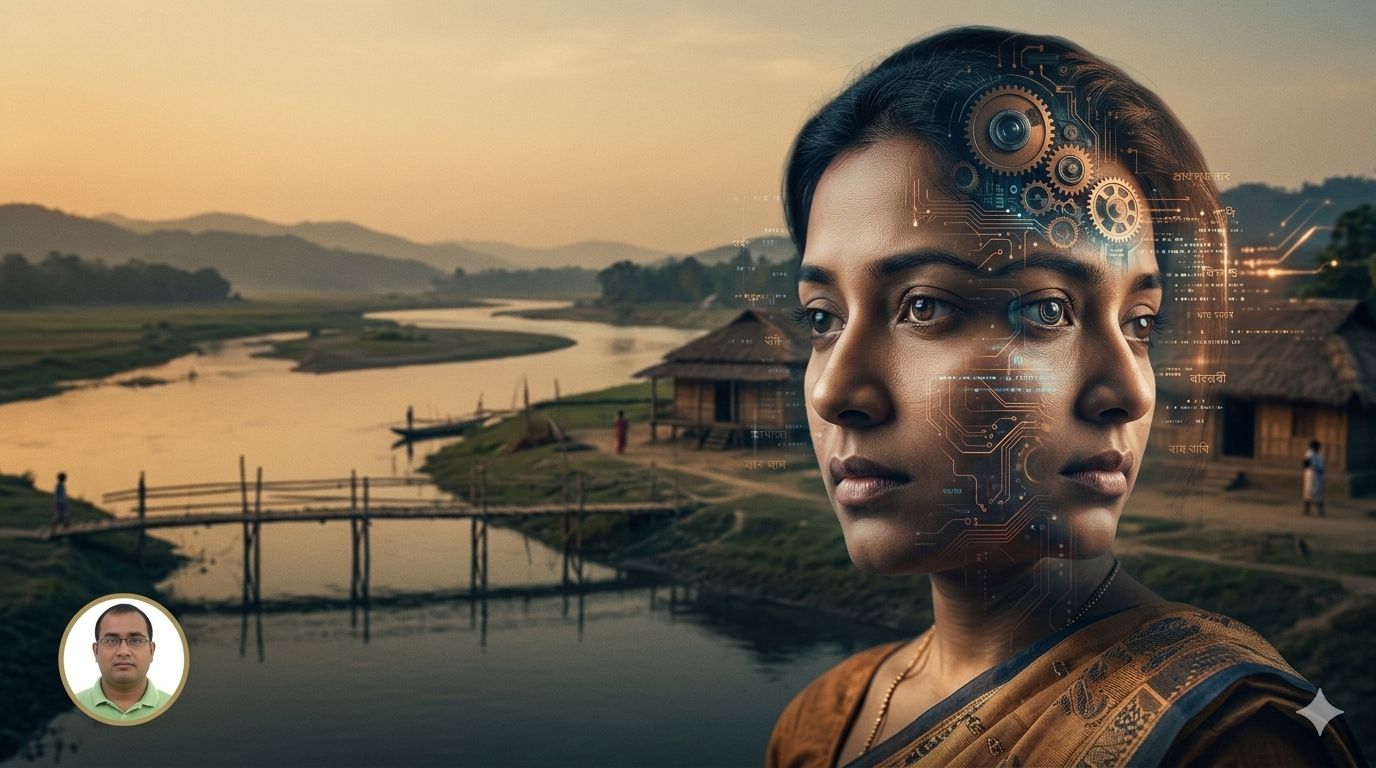
Ami Jen Jentra (Are we machines?): Questions that Assamese film ‘Homework’ compels us to ask

Anuraag is a ‘Contributing Writer’ at the journal.
Ratipuwa xui uthi
Jabore je hoi schoololoi
Godhur godhur porhar buja
Korhiyautei jaai din duroloi
Schoolor hekhot tution kori
Ghuri aahi eku nepau bisari
Homework kori vagori
Bisonar kulakei lou Xaamori
Aami jen jantra
Jantra…
Waking up every morning
It’s time to head for school
Carrying the heavy burden of education (books)
Takes up the entire day
Then comes tuition after school
We return home with our empty selves
Tired by the day’s homework
We embrace the lap of our beds as the only solace
Are we Machines?
Machines…
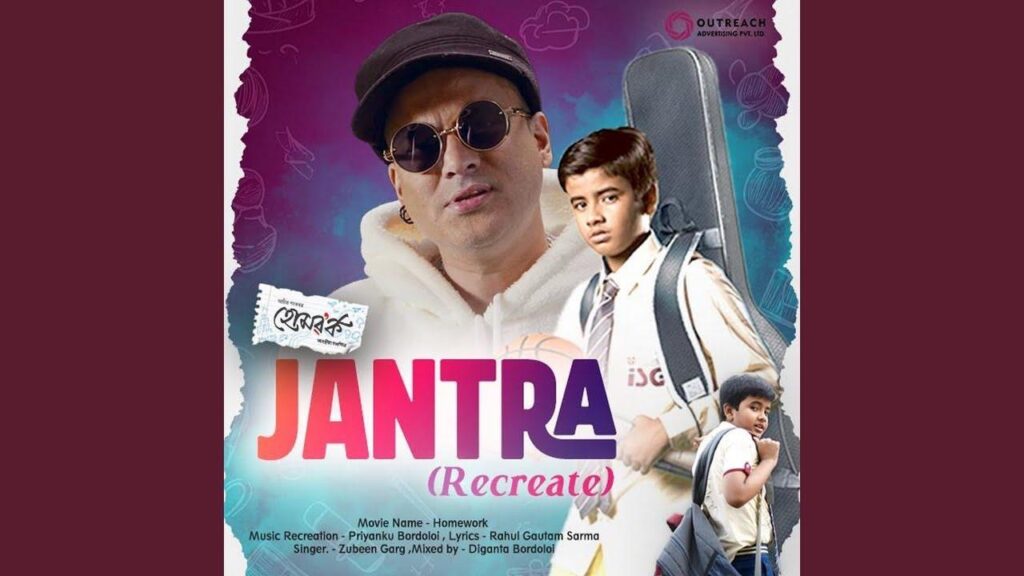
The above lines form the opening to Assamese Heartthrob Icon Zubeen Garg’s[i] popular song Jantra[ii] (Machine) which belongs to the album of the same name released in 2004. The song, amongst the numerous cult classics by Zubeen Da (elder brother) that still arouses Assamese Millennials and early Gen Z, revolves around the materialistic focus and monotonous pattern of 21st century urban life encompassing all stages of life− childhood, youth and old age− with every stanza ending with the same question of Ami Jen Jantra (Are we machines?). As evident from the translation above, the opening stanza focuses and laments the highly competitive and marks-centric education system subjecting the tender shoulders and backs of children with the ever-increasing weight of syllabus, assignments, homework, tuitions, exams and most importantly, the perennial Indian parental and societal (uncle, aunty, neighbour etc) pressure to be the topper in class. Mental peace, happiness and relaxation were treated as taboo or at worst the signs of ‘blasphemous rebellion’ within ‘disobedient’ and ‘ungrateful’ offspring− Millennial and early Gen Z readers will be able to relate and agree.
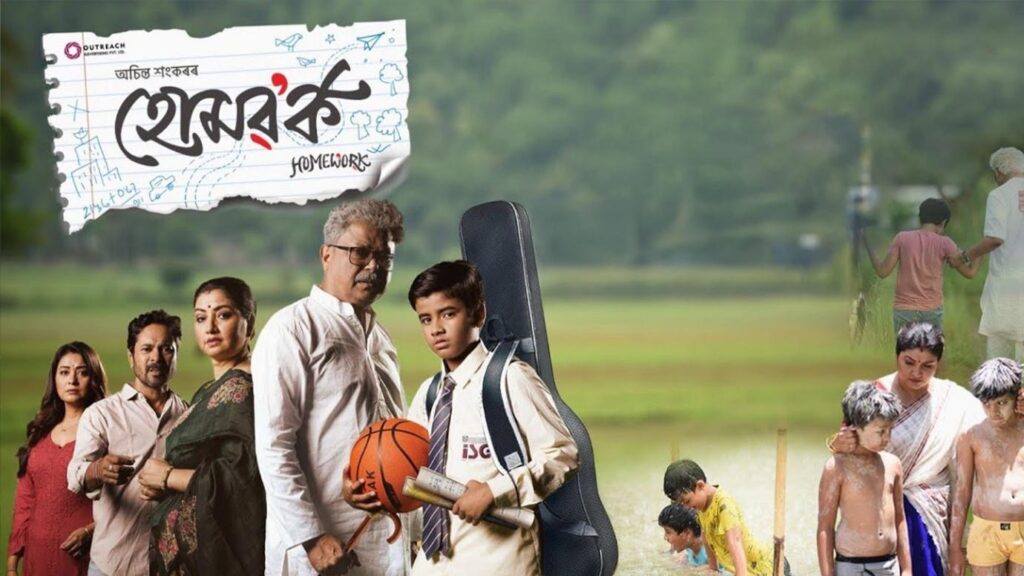
It is this conflict between the grinding machine of modern-day competitive focused education system and the joy and innocence of childhood that forms the plot of the Assamese film Homework[iii]. Written and directed by Achinta Shankar and produced by Mukesh Mour and Nidhi Mour under the banner of Outreach Advertising Pvt Ltd, the film was released on 15 May, 2026 casting Surjanga Jiu Margherita as the child protagonist with supporting role from Brityanta Nayan Kashyap and Alankrita Padmarag Goswami as child actors. Other roles have been portrayed by veterans of the Assamese film industry such as Debajit Majumdar, Hiranya Deka, Rimpi Das, Padmarag Goswami, and Gayatri Mahanta amongst others. The crowning element of the movie was the special appearance of Zubeen Garg in the newly re-created version of the song Jantra[iv] −with new lyrics by Rahul Gautam Sarma and sung by Zubeen himself − played towards the end of the movie. The fact that this was the singer’s last on-screen appearance before his tragic demise on 19 September, 2025[v] was a major factor in drawing audiences to the theatres driven by emotion and nostalgia. Popular commentary has even compared Homework’s reception with that of Zubeen Garg’s last film Roi Roi Binale[vi] (Trans- Tears Still Flow) which was released more than a month after his demise on 31 October, 2025.
The plot of Homework revolves around the protagonist Apu (portrayed by Surjanga), a 10-year-old growing up in the urban environs of Guwahati whose flight into dreams and freedom is often brought down by the strict berating of his mother (Rimpi Das) anxious about her son’s future and especially his disdain for homework. Added to that mix are the ‘villainous’ school teachers hell-bent on destroying the upcoming summer vacation by dumping tons of summer homework and the archetypal ‘Hitlerian’ tuition teacher who issues the diktat that Apu should stick his report card with poor grades in his study table which would act as an ’inspiration’ for him to get serious regarding his academics. Things go further south for poor Apu when it is revealed that his summer vacation plan of spending time at his maternal grandfather’s home in the village had to be cancelled because of his father’s urgent work in Kolkata. However, a ray of home emerges when Apu’s grandfather (Debajit Majumdar) himself arrives in Guwahati to take his grandson away from the hustle bustle of the city and most importantly the dreaded ‘homework’ to the green and calm ambience of the quiet village life. The remaining segment of the film focuses on Apu’s rediscovery of himself in the quiet, slow-paced and humdrum rhythm of rural life while surrounded by the warmth of his maternal uncle and aunt (Padmarag Goswami and Gayatri Mahanta respectively), the playfulness and companionship of his cousins Tipu (Brityanta Nayan Kashyap) and Tia (Alankrita Padmarag Goswami) and the caring love of his grandfather who tries to connect Apu with the roots of traditional Assamese culture and life. Parallel and equally important is the realisation by Apu’s mother of the need to give her son the proper environment and space to find himself instead of stifling his early growth due to the pressure of academic excellence and homework which happens towards the end of the film.
Despite being a children-centric film, the story and its underlying message hits audiences across the age and generation gap. Especially the contrast between the hustling and competitive urban life and the quiet and contemplative rural counterpart upheld by the film speaks to the current generation of Millennials and early Gen Z like myself currently navigating the journey of ‘adulting[vii]’ in a world battered by climate change and military conflicts[viii] who sometimes feel nostalgic about the warmth and carefree-ness of bygone childhood days. Buckling under the pressure of a general sense of nihilism and hopelessness[ix] fuelled by rising costs of living and decreasing wages, the arrival of AI and the disappearance of job opportunities[x] and now paper-leaks[xi], like Apu our minds too drift away to the days of childhood spent in the warmth and care of parents and grandparents and the cackle of cousins and friends shielded away from the harsh world outside. Where the only robots you had to worry about appeared in movies and video games, not in real life threatening to replace you and gobble up your job[xii]. When climate change did not carry the threat of planetary collapse[xiii], but spoiling the evening cricket tournament with friends. When wars appeared as Hollywood/ Bollywood action flicks and as news paper headlines instead of events which knocked the door in the form of rising prices, fuel crisis[xiv] and nihilistic anxiety[xv] (This is not to discount or trivialise the experiences of our counterparts growing up in regions such as Iraq[xvi], Syria[xvii] and Afghanistan[xviii] during the 90s and 2000s). Yet, like Apu’s mother, would world leaders and tech lords[xix] undergo inner realisation and take corrective steps?
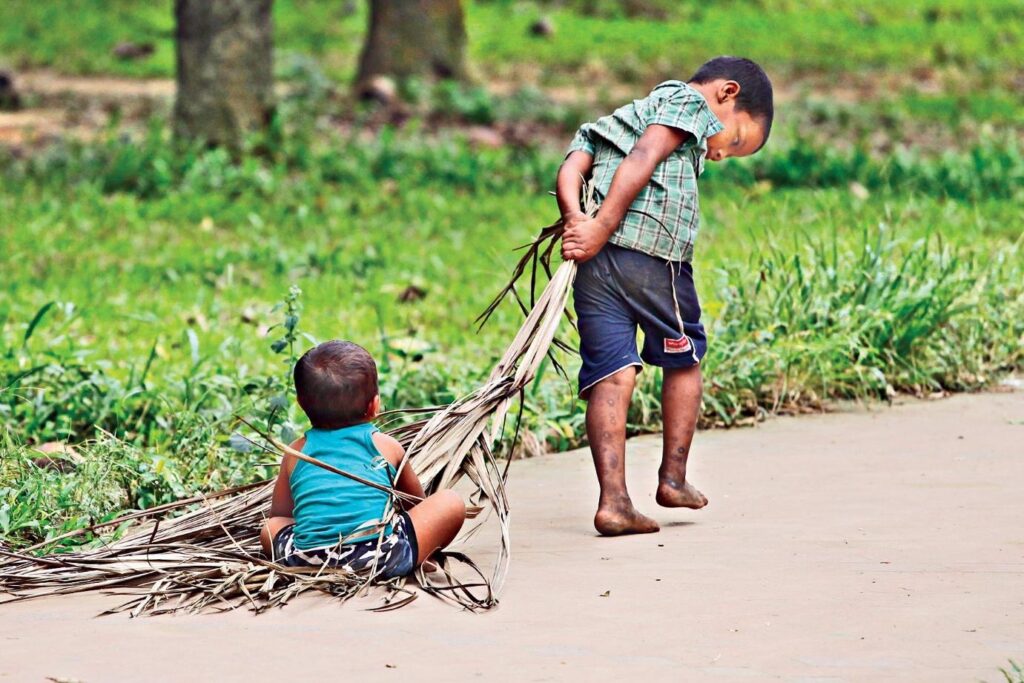
The movie, by its depiction of the idyllic and peaceful Assamese rural life, allows a further route of escape to nostalgia especially for the Assamese Millennial and Gen Z audience including myself. Scenes such as Apu’s first swimming lessons in the pukhuri (village pond), Apu enjoying the ride of the dhakua (the stiff, dried leaf of a coconut tree) being pulled by Tipu, the duo enjoying the first drops of rainfall, wallowing in the fresh mud of the fields, catching fireflies while returning home and joining cousins in the evening prayer are reminiscent of one’s own summer and winter holidays spent in the ancestral village. Yet, the most significant scene which tugged at the emotion of nostalgia was that of Apu and his cousins seated in the dhari pati (traditional Assamese bamboo mat) while their grandfather narrated stories about Assamese historical icons such as the Neo-Vaishnavite saint Mahapurush Srimanta Sankardeva[xx] and the Ahom general Lachit Borphukan[xxi]. The importance of this scene lies not only in the reminiscence of sweet memories of one’s grandparents but also in the fact that such scenes have become rarer in today’s times as both the grandchild and the grandparent become tech-savvy− the former busy in scrolling reels and the latter in forwarding hitherto unknown ‘facts’ like an obedient student of WhatsApp University. Moreover, Apu’s grandfather who tries to introduce his grandson to his traditional history and culture not only via bedtime stories but also by visiting and participation in traditional community institutions such as the Naamghor[xxii] (a traditional Neo-Vaishnavite place of congregational prayer) and celebrations such as Bhaona[xxiii] (traditional Assamese dance drama) is symbolic of the paternal or the family elder passing on traditional socio-religious and cultural knowledge to the upcoming generations− a figure and phenomenon rarer than dinosaur fossils in today’s era of Fifth Industrial Revolution[xxiv].
Collectively the above depictions of community life and warmth of kin relations strike the hardest when seen in the context of our current era marked by the ‘Epidemic of Loneliness’[xxv] where individuals seek emotional support and companionship from AI chatbots rather than living humans[xxvi]. Such a situation has given rise not only to individual and collective alienation, but also to the related problem of alienation or disconnect from one’s natural surroundings leading to increasing instances of bio-fear[xxvii]. This is highlighted in the brief altercation between Apu’s mother and his uncle where the latter berates his sister for raising a kid trapped within the four walls of the apartment who is neither able to walk barefoot on earth nor tolerate the light drizzle of rain thereby underlining the bounded and artificiality of current urban lifestyle. At the same time, Apu’s emotional and individual alienation is also emphasised by his grandfather’s advice to his daughter of not sacrificing her son’s early years of present childhood to the whims of an uncertain future and most importantly of seeing ‘homework’, tests and assignments etc as pathways for learning discipline not as the end goal of life itself. Here, the second advice of Apu’s grandfather can be juxtaposed in the current context of ever encompassing AI and social media to state that virtual connection should enable human connection and relationship instead of replacing it. However, can and will the previous advice of grandfather find ears in today’s era of intensive rat-race, neck-deep competition and increasing glorification of ‘hustle and grind culture’[xxviii]? (briefly shown by the busy and hectic schedule of Apu’s parents).
Coming back to the film, the movie’s slow pace and lack of any dramatic transition or plot change reminds the audience of the charm and innocence of the children’s cinema of yesteryears despite conveying a deep thought-provoking message. Hiranya Deka’s character of the village medical compounder provides the comic relief and humour grounded in the simplicity of village life. Yet the showstopper remains Zubeen Da and the ‘re-created’ version of Jantra which, although centred around the pressure of modern-day school education system, also resonates with those of us who have passed boards ten years ago. Lines such as Pokasulir Newtone kiyonu apple tun a khale? (Why didn’t the white-haired Newton eat the apple that fell on his head?), Okora Platoe kiyo Politics likhile? (Why did the fool Plato had to author Politics?), Itihaxor roja-bure iman mora-mori kiyo kore? (Why did the kings of History fight with each other so much?) and others appeal not only to the current Gen Alpha and late Gen Z students exposing the current compromised CBSE system[xxix]’ but also to past exam-goers within Millennials and early Gen Z who were once haunted by Newton’s laws and formulas, Thales and Pythagoras’s theorems, the chemical equations of Bohr and the long list of regnal years of monarchs from Mauryas to Mughals. But the Highest Common Factor (HCF) amongst all generations is constituted by this line− Xoru xoru xixuburor murtu mili juli sobei khale [All of these (figures and subjects) have ganged up to wreck the brains of innocent children]. Children both past and present.
Finally, the movie ends with the message on the screen− Manuh houk Jantra nahai (Be Human, Not Machine). Yet Zubeen Da’s voice continues to echo and haunt us even now
AMI JEN JANTRA?
References
- Mukhim, Patricia, ‘Zubeen Garg and the weight of stardom’, The Indian Express, 14 October, 2025 (https://indianexpress.com/article/opinion/columns/zubeen-garg-stardom-celebrity-death-10305954/).
- ‘Ami Jen Jantra’, Jantra, Golden Collection of Zubeen Garg, Assamese Lyrical Video Song, YouTube (https://www.youtube.com/watch?v=UlBtvact_ng&list=RDUlBtvact_ng&start_radio=1).
- ‘Homework’, Entertainment Times, 11 May, 2026 (https://timesofindia.indiatimes.com/entertainment/assamese/movie-details/homework/movieshow/131009199.cms).
- ‘Jantra (Recreate)- Lyrical Video’, Zubeen Garg, Homework, YouTube, 2025 (https://www.youtube.com/watch?v=LLXK27F1NEI).
- ‘Assamese cultural icon Zubeen Garg passes away’, The Hindu, 19 September, 2025 (https://www.thehindu.com/entertainment/music/assams-popular-singer-zubeen-garg-dies-while-scuba-diving-in-singapore/article70069446.ece).
- Kodur, Swaroop, ‘Roi Roi Binale review: Zubeen Garg’s swansong is a fitting ode to his charismatic persona’, The Federal- Voice of the States, 31 October, 2025 (https://thefederal.com/film-reviews/roi-roi-binale-zubeen-garg-film-rajesh-bhuyan-assam-singer-movie-review-214093).
- Steinmetz, Katy, ‘This is What Adulting Means’, Time, 9 June, 2016 (https://time.com/4361866/adulting-definition-meaning/).
- Vijayan, Anilkumar Payyapilly, ‘Twilight of the Patriarchs : How Old Men Wage Wars on Futures That are Not Theirs to Live’, The Wire, 23 June, 2025 (https://thewire.in/politics/twilight-of-the-patriarchs-how-old-men-wage-wars-on-futures-that-are-not-theirs-to-live).
- Tsang, Jessica, ‘Existentialism, Nihilism, and all the isms that make up Gen Z’, Medium, 5 November, 2023 (https://medium.com/@jessicatsa_g/existentialism-nihilism-and-all-the-isms-that-make-up-gen-z-88c2e283580b).
- Tewari, Trisha, ‘55% of Gen Z, 52% of Millennials putting major life plans on hold: Is economically uncertainty turning adulthood into a waiting game?’, The Times of India, 8 June, 2026 (https://timesofindia.indiatimes.com/education/careers/news/55-of-gen-z-52-of-millennials-putting-major-life-plans-on-hold-is-economic-uncertainty-turning-adulthood-into-a-waiting-game/articleshow/131579746.cms).
- Kapoor, Rakesh, ‘Paper Leaks: India’s silent assault on meritocracy’, The Times of India, 8 June, 2026 (https://timesofindia.indiatimes.com/blogs/voices/paper-leaks-indias-silent-assault-on-meritocracy/).
- ‘How Indians are Training AI Robots to Take on Household Jobs in the Future’, NDTV, 11 June, 2026 (https://www.ndtv.com/india-news/how-indians-are-training-ai-robots-to-take-on-household-jobs-in-the-future-11621668).
- ‘Scientists warn parts of the planet could freeze if a major ocean current collapses: These regions may stay relatively safe’, Times of India, 5 June, 2026 (https://timesofindia.indiatimes.com/science/scientists-warn-parts-of-the-planet-could-freeze-if-a-major-ocean-current-collapses-these-regions-may-stay-relatively-safer/articleshow/131507175.cms).
- Mody, Ashok, ‘India’s bill for the Iran war’, Frontline, 9 June, 2026 (https://frontline.thehindu.com/news/us-iran-war-india-impact/article71076699.ece).
- Siu, Ernestine & Bhaimiya, Sawdah, ‘Gen Z is grappling with global chaos- here’s how they’re coping with ‘inheriting broken systems’, CNBC, 2 July, 2025 (https://www.cnbc.com/2025/07/02/how-gen-z-is-grappling-with-global-chaos.html).
- ‘Iraq War’, Britannica (https://www.britannica.com/event/Iraq-War).
- ‘Syrian Civil War’, Britannica (https://www.britannica.com/event/Syrian-Civil-War).
- ‘Afghanistan War’, Britannica (https://www.britannica.com/event/Afghanistan-War).
- Empoli, Giuliano da, ‘How tech lords and populists changed the rules of power’, Financial Times, 27 September, 2025 (https://www.ft.com/content/85ee3be0-c9a6-4a1d-baf9-8b2ca9e46a85).
- Talukdar, Sushanta, ‘A saint of the people’, The Hindu, 14 November, 2012 (https://www.thehindu.com/books/a-saint-of-the-people/article4091256.ece).
- Dutta, Arup Kumar, ‘Lachit Barphukan at 400: Remembering the naval chief who defeated Aurangzeb’s army and prevented the Mughal conquest of Assam’, The Indian Express, 24 November, 2022 (https://indianexpress.com/article/opinion/columns/lachit-barphukan-at-400-naval-chief-who-defeated-aurangzebs-army-8287888/).
- ‘Namghar’, Wikipedia (https://en.wikipedia.org/wiki/Namghar).
- ‘Bhaona’, Wikipedia (https://en.wikipedia.org/wiki/Bhaona).
- Anil, Alok Medikepura, ‘Technology convergence is leading the way for the fifth industrial revolution’, World Economic Forum (WEF), 13 January, 2025 (https://www.weforum.org/stories/2025/01/technology-convergence-is-leading-the-way-for-accelerated-innovation-in-emerging-technology-areas/).
- PS, Anuradha, ‘Loneliness epidemic has come to India too. Start building emotional infrastructure’, The Print, 24 May, 2026 (https://theprint.in/opinion/loneliness-epidemic-has-come-to-india-too-start-building-emotional-infrastructure/2939469/).
- Hau, Isabelle & Winthrop, Rebecca, ‘What happens when AI chatbots replace real human connection’, Brookings, 2 July, 2025 (https://www.brookings.edu/articles/what-happens-when-ai-chatbots-replace-real-human-connection/).
- Cwienk, Jeanette, ‘Why we’re becoming disconnected from nature’, DW, 15 February, 2026 (https://www.dw.com/en/lack-of-outdoor-experience-hampers-healthy-development-mental-health-nature-anxiety-protection/a-75828665).
- Carnegie, Megan, ‘Hustle culture: Is this the end of rise- and-grind?’, BBC, 20 April, 2023 (https://www.bbc.com/worklife/article/20230417-hustle-culture-is-this-the-end-of-rise-and-grind).
- ‘Explained OSM row: How 3 students exposed loopholes in system, forced CBSE to admit flaws’, Deccan Herald, 1 June, 2026 (https://www.deccanherald.com/india/explained-osm-row-how-3-students-exposed-loopholes-in-system-forced-cbse-to-admit-flaws-4023111).


 Login
Login