

Education is not merely to generate wealth

In the discourse about the status quo and the zeitgeist of the modern times, it is evident that the emphasis is majorly on the building and sustenance of financial capital. The World Bank’s The Changing Wealth of Nations 2018 report shows that the global wealth grew an estimated 66 percent ($690 trillion to $1143 trillion) from 1995 to 2014 with financial capital making its largest part, while the wealth inequality across all forms of capital (financial, natural, human per capita, etc.) remained stagnant or increased. This shows that the viability and functions of other forms of capital such as the social, human, intellectual, natural capital, in their core, only remain crucial for the financial capability they can generate.
Be it education, social upliftment, science and technology, agriculture, natural resources, environment, infrastructure; measurement of success and failure of any development in the society, state or country, through any means, is calculated by the monetary value of return on investment. The agency of classifying developments as successful or unsuccessful rests with the investors who aim at maximizing profits, inevitably acquiring immense power.
It is seen that firms with short-term investors seek exploitative innovation more than exploratory innovation to focus on current profits and eliminate the risk associated with exploratory, long-term, risky innovations (Gao, Hsu, Li, 2014). As a consequence, corporations’ interest in seeking economic growth and skyrocketing profits are mostly catalysed by exploitative innovation (Gao et al, 2014).
Few examples of profiteering from exploitative innovation are: Edward Bernays’ PR propaganda of mass manipulation, Martin Shkreli’s acquisition of manufacturing license of Daraprim and increasing its price by 56 times, Pfizer’s patent on Anti-retroviral drugs in developing countries such as South Africa leading to loss of millions of lives, Facebook’s meddling in the 2016 US elections, industrial emissions causing climate change. Through these examples, we can see that exploitation thrives when people’s lack of awareness is taken advantage of, for financial gains. Investors profit when they successfully employ politics, lobbying and existing technology to filter knowledge, creating selective, tactical awareness.
This lack of awareness mainly pertains to blatant profiteering by capitalists, who effectively obfuscate the negative externalities of their actions, hindering holistic perception and critical thinking. Thus, this unawareness becomes the underlying catalyst for the challenges such as climate change, political volatility, technological monopoly, managerial short-termism, et al.
It is then education’s prerogative to create this awareness, which has been merely reduced to a financial measure of human capital (Biesta, 2009). The purpose of education is limited to equipping humans for creating financial capital. But it needs to be expanded by creating a system of evolved perception and awareness on a massive scale. This awareness should be about the causes and effects of significant developments in science and technology, events and situations around the world.
It is therefore imperative to decolonize the purposes of the other forms of capital from their servitude to creating financial wealth, and give each one a renewed purpose and importance in human life. In this essay, I want to propose actions for repurposing education by using financial capital to build human capital, and not the other way around.
Why is there a need to repurpose education?
Human mind’s ability to perceive thrives on the availability and accessibility of knowledge, accompanied with time to assimilate it into being cognizant. Today when we speak about education, from school to college, we understand its usefulness with parameters such as scope of career options and job prospects.
Although, jobs are an important outcome of education, they have become a measure of the quality of education. In a world of income inequality – where the top 1% have more than twice as large a share of wealth as the bottom 90% (Stone, Trisi, Sherman, Taylor, 2018) – with exponentially increasing unemployment rates, most people obviously strive towards investing their time to seek education for skill development.
The vicious cycle of demand and supply of ever altering skills coupled with the existing income inequality, doesn’t leave much space for the motive of education to evolve. In a social conditioning where competition and productivity are revered values, and being a part of a big corporation is a great achievement in the race of people striving to meet ends, the cognizance about how this conditioning is shaping the world around us is inevitably curbed. Education is then limited to curating human capital with organized skills, thoughts and abilities that are sufficient to serve individual economic incentives and consequently economic profitability for the investors.
Innovations too represent corporations’ attempt to accumulate and create knowledge that is recognized to catalyse economic growth and productivity (Solow, 1957; Romer, 1990) while also playing a key role in the competitive advantage of the nations (Porter, 1998). But the true purpose of education is seen when it renders the ability of critical thinking, self-reflection, mindfulness and awareness of one’s actions and its implications on their surroundings.
Why is this awareness necessary?
We can understand the implications of unawareness of one’s actions on their surroundings by extending Hannah Arendt’s stance on ‘banality of evil’ into this context. In her book Eichmann in Jerusalem: A Report on the Banality of Evil, she talks about her impression of a man who ordered the slaughter of millions of Jews to be of a sinister psychopath, yet during his trial in Jerusalem, she discovered how inconspicuous, unremarkable and banal he was.
According to her book, Adolf Eichmann’s actions during the Nazi regime were that of thoughtlessness, separate from morality, a part of his job that he didn’t regret doing. Eichmann argued during the trial that he had no intention “to destroy the Jewish people”, but was just acting on the laws and orders under his flag. This lack of self-reflection and alienation of oneself from one’s own conscience is, according to Arendt, very dangerous; I cannot agree more.
The banality in normalization of alienation of one’s conscience in today’s times, is not invisible in our normal living. As a consequence of current education, we too are prone to separate ourselves from our jobs as easily as Eichmann did. The investment of our skills and intellect for the profit of our employer doesn’t seem something out of ordinary, yet when we look at the outcomes of the profit seeking developments, we realize that that’s where most of the ecological, socio-political and economical challenges emerge, such as data theft, expropriation of natural resources and land from communities, etc.
When we subsume our identities into a cocoon, separate ourselves from our work, we are restricting our very humanity. We are not only alienating ourselves but withdrawing into a bubble where the extent of our understanding of humanity extends only to our immediate selves. But the fact about humanity is that it is a collective noun.
In this discourse about the modern-day challenges and purpose of capital, the capital as a society, of our intellect and our skills needs to be channelized for an impactful and sustainable development of human society. And for that, institutional pedagogy and access to knowledge has to become a platform for creating individual human awareness on a massive scale.
Where is the change in education policy required?
The parameters on which we understand education have to expand. We have stopped canvassing the idea of education and related policies, but are only trying hard to implement the current policies. Building new schools, making education affordable, improving teacher-student ratio, managing drop-out rates, etc., are all very important, yet are just the implementations to supplement the existing pedagogy. In India, the government invested 2.7% of the total GDP in education in 2018 but it has to increase significantly.
Although, there are logistical limitations in terms of accessibility to schools and the number of teachers, where the government must invest more, these issues have been discussed before. The need now is to employ the already existing logistics to question and inherently change the purpose and methods of pedagogy.
Change in pedagogy and curricula
There is a need to invest in the overall enhancement of perception of children till the end of High school. This means, till the age of 17 years, every child must be fully exposed to all the subjects in a typical Liberal arts paradigm. The way in which this should change is by setting various moments in history and understanding developments in science, philosophy, art, psychology, politics and economics in those moments.
Till primary school, basic literacy of language such as alphabets, sentences and grammar; basics of mathematics such as mathematical operations and basic algebra; and basics of science should be covered so as to take the conversation forward.
During the Secondary school, each grade can be placed in a different century in history. All the subjects could be woven together to create a story of that century, mainly placed in the context of the country. This would go hand in hand according to the developments of the time, and a storytelling concept would widen the perception of the students and create much more engagement. They will be able to acknowledge the causes and the necessity of the various movements, scientific developments, inventions and their applications.
It would be similar to reliving in that century. Knowing the stories incorporated in the work done by people like Einstein, Turing, Tesla, Roosevelt, Gandhi, Mandela, et al, would inspire them to understand and be a part of the process of these developments. Meanwhile, subjects like Science, Mathematics and Language can progress faster with a pace that can cover various topics in detail. By higher secondary school, students must enter into the current century and should be taught deeply about current and modern developments and happenings.
This way, students will no longer be studying subjects forcefully or for the sake of getting good grades and passing. Testing methods would also function better if students have a context of the importance of what they are studying. Being exposed to the knowledge about where humanity comes from and where it is headed, along with stories of various leaders and their actions, will make the students think critically, take risks and be aware of the consequences of their lived realities. Inspirational stories are known to muster courage and confidence to take risks and manifest new ideas into reality.
With the fast-paced technological and scientific developments, being up-to-date with modern knowledge such as writing code, new languages, quantum computing, artificial intelligence, block-chain, etc. becomes very important in order to remain relevant. Therefore, education should become a continuous cycle. From an age-related occurrence, it should traverse into being a continuous cycle of learning and working, by continuously leveraging new technology for growth.
Government funding
Public funding is necessary to side-step investors’ economic bottom lines. The Indian government funded the startups in sectors of ecommerce (~18% of the total startups approved for funding), Enterprise application (~15%) and fintech 49th St. Gallen’s Symposium Capital for Purpose start-ups (~13%) the most in 2017 (Agarwal,2018)2. There needs to be a balance so that human capital can evolve at pace with technology and the changing times. Therefore, government should incentivise and encourage more promising startups in the educational and social-sector.
With critical thought and ability to distinguish between the positive and negative implications of their work, businesses will hopefully become more aware of factors beyond their profit margin. They will be equipped with mindful, courageous individuals who will take risks to find a balance between exploitative and explorative ways of innovation. This will enable greater insights through discussions of conflicts (Smith, Berg, 1987), similar to solving adaptive organisational challenges by leveraging negative feedback loops (Meadows, 1997).
Repurposing education is the first step to flipping the servitude of human capital for building financial capital. International Baccalaureate’s mission to develop inquiring, knowledgeable, thinking, communicating, principled, compassionate, risk-taking, reflective, balanced and open-minded individuals, are the kind of values we need to develop on a larger, more accessible scale. Once a large population is able to first know about the various challenges, acknowledge them and understand the causes behind them, there will be a domino effect into taking actions to bring positive, sustainable and capital impact.
References
- Lange, Glenn-Marie, Quentin Wodon, and Kevin Carey, eds. The changing wealth of nations 2018: Building a sustainable future. The World Bank, 2018.
- Gao, Huasheng, Po-Hsuan Hsu, and Kai Li. “Managerial short-termism and corporate innovation strategies.” Unpublished. http://dx. doi.org/10.2139/ssrn 2407075 (2014).
- Biesta, Gert. “Good education in an age of measurement: On the need to reconnect with the question of purpose in education.” Educational Assessment, Evaluation and Accountability (formerly: Journal of Personnel Evaluation in Education) 21.1 (2009): 33-46.
- Arendt, Hannah. “Eichmann in Jerusalem: A report on the banality of evil.” On Genocide; an anthropological reader. Eds. Alexander Laban Hinton. Oxford; Blackwell Publishing (2002).
- Stone, Chad, et al. “A guide to statistics on historical trends in income inequality.” Center on Budget and Policy Priorities 26 (2015).
- Solow, Robert M. “Technical change and the aggregate production function.” The review of Economics and Statistics39.3 (1957): 312-320.
- Romer, Paul M. “Endogenous technological change.” Journal of political Economy 98.5, Part 2 (1990): S71-S102.
- Porter, Michael E. Competitive advantage of nations: creating and sustaining superior performance. Vol. 2. Simon and Schuster, 2011.
- Smith, Kenwyn K., and David N. Berg. Paradoxes of group life: Understanding conflict, paralysis, and movement in group dynamics. Jossey-Bass, 1987.
- Meadows, Donella. “Leverage points.” Places to Intervene in a System (1999).
- Smith, Kenwyn K., “The Coin of the Realm: Money, Trust, Mutuality and Fiction”. Unpublished
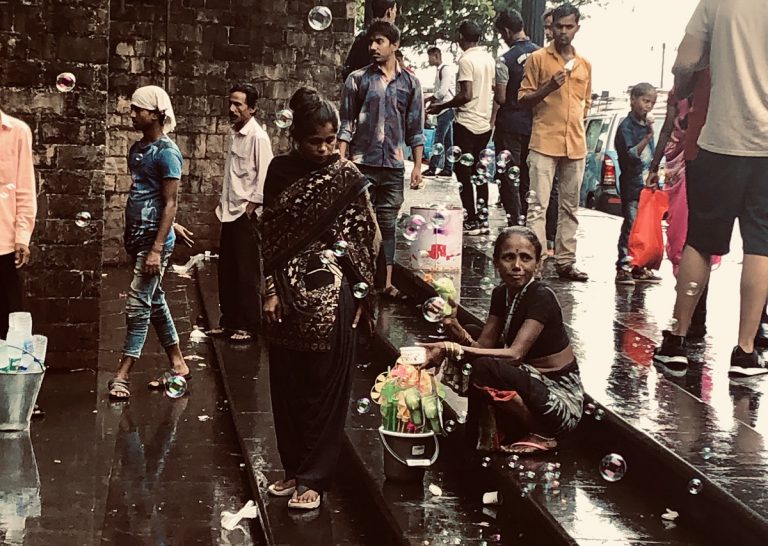
Featured Image Credits: Sri Harsha Dantuluri



 Login
Login
Readers' Reviews (3 replies)