

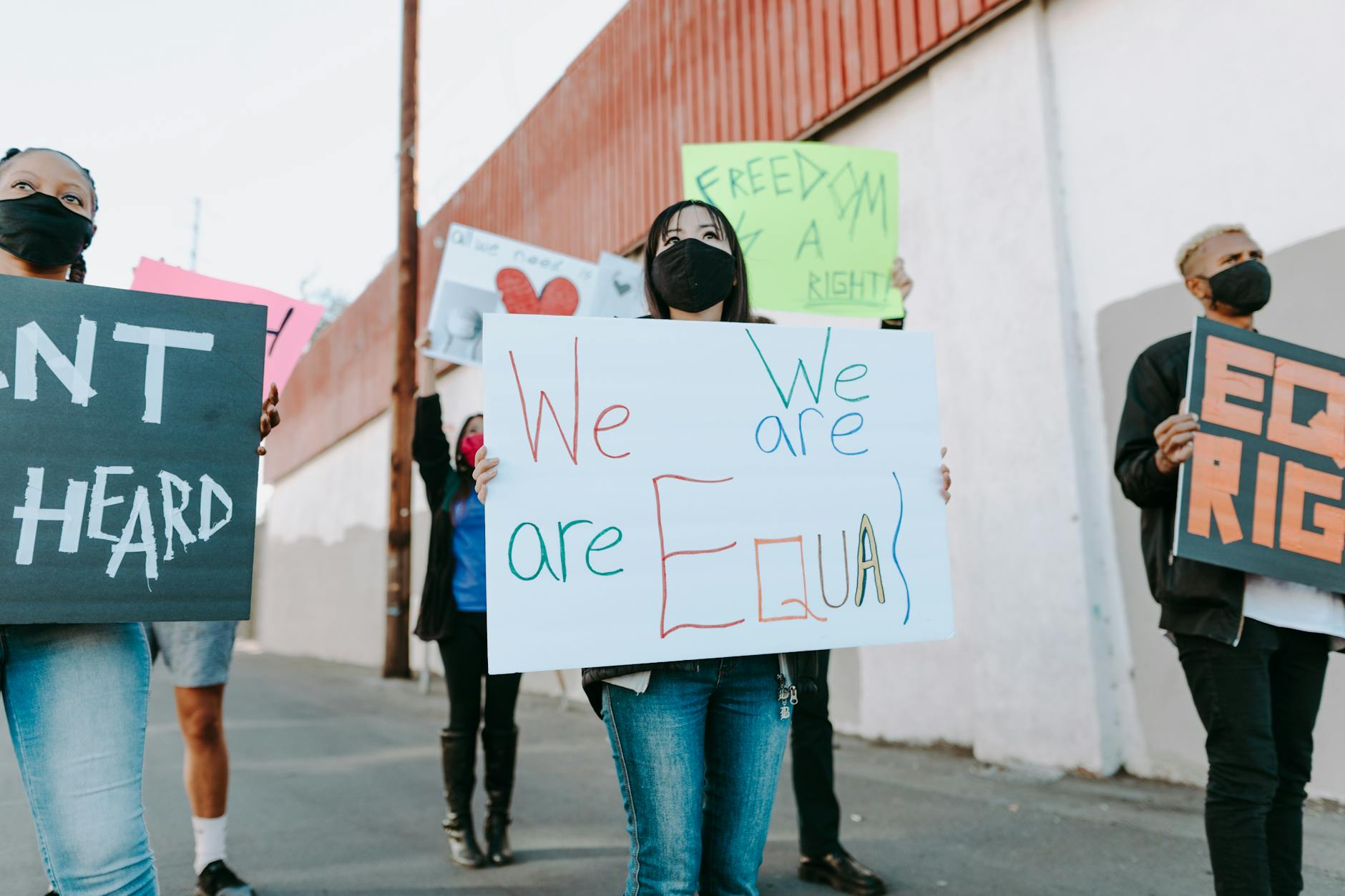
Western democracies on the edge? Polarisation, protests, and the battle for legitimacy

Saranya Chattopadhyay is an Indian Political Science student, authored “In Search of the Creator”, completed UN ESCAP/UNCTAD on tariff sustainability and UNECE emissions reporting (June 2023). Ex-Asia in Global Affairs intern.
In recent years, western democracies have profoundly experienced unprecedented internal strain, leading many scholars to provide the description of the western political landscape as a novel form of “civil war” (Fukuyama, 2022). Whether it can be termed as civil war or not is not a matter of our consideration for us, at least for now, but our actual focus should be on the emergence and the evolution of the precipitating “crisis,” its underlying causes and manifestations causing the ongoing conflict in the western world. Unlike the ideological battles of the Cold War, these disputes revolve around legitimacy, identity, and belonging. These conflicts are not fought with technologically advanced weapons based on the foundation of defence diplomacy but with popular narratives, institutions, and public trust.
Economic inequality, cultural polarisation, and the rise of disinformation have created fragmented societies where consensus is rare and legitimacy is highly contested. From subsequent partisan gridlock in Washington to violent protests in Paris and the electoral rise of far-right parties across Europe, the western world faces crucial internal discord. Comprehensive understanding of the roots of these divisions is essential for evaluation of whether the west can undergo transformation in terms of its institutions and sufficiently adapt to novel political realities (Norris & Inglehart, 2019).
Now a pertinent question is, what are the most dominant causes responsible for the changing political environment?
Firstly, the economic grievances. Stagnation in terms of wage distribution, widening wealth gaps, and unequal regional development have led to the massive erosion of public trust. The inflationary crisis of 2022–2023 heightened this discontent.
In France, protesters in 2023 framed Macron’s pension reform as an elite imposition on working-class citizens, sparking some of the largest strikes in decades (Le Monde, 2023). Meanwhile, in Germany, the AfD’s electoral surge in 2024 was strongest in eastern states, where the unemployment rate primarily remained above the calculated national average (Deutsche Welle, 2024).
This perception of an ever dominating elite becomes an effective fertile ground for active political actors who promise radical alternatives, fundamentally transforming through formulation of the will, in context of legislation.
Secondly, rapid cultural change and evolutionary ideological strands have sharply intensified the political divides. Progressive advances in gender rights, immigration policy, and racial reckoning have been celebrated by many but have provoked sharp counter-reactions.
Italy under the presidency of Giorgia Meloni in 2023 imposed restrictions in the context of legal recognition for same-sex parents, framing the measure as a defence of traditional families (BBC News, 2023). In the Netherlands, 2024 saw large-scale protests against asylum policies, illustrating how cultural insecurities fuse with economic anxieties (The Guardian, 2024).
Thirdly the institutional erosions are also leading to unprecedented consequences, creating profound imbalance in the political climate. In the European Union, ongoing disputes over Hungary’s and Poland’s curtailing of judicial independence and media freedoms demonstrate how backsliding undermines collective democratic norms (European Commission, 2024). Last but not the least, media fragmentation and disinformation also tends to efficiently accelerate polarisation by privileging outrage and conspiracy. During the French protests of 2023, disinformation about police brutality circulated widely, undermining trust in state institutions. As a result, the citizens are inhabitants of two parallel yet autonomous coequal realities i.e. one in which institutions are trustworthy and reformable, and another in which they are irredeemably corrupt (Pew Research Center, 2024).
Our second matter for consideration is how the crisis has been manifested adequately in the contemporary western context. Firstly it can be witnessed from the mass protest and unrest. France’s 2023 pension protests, Germany’s farmers’ strikes in 2024 against climate regulations, and Poland’s women’s rights marches exemplify how democratic mobilisation increasingly intersects with violent confrontation (Reuters, 2024). Secondly, policy paralysis is also visible throughout the European nations, like post-Brexit Britain continues to suffer from political gridlock (The Economist, 2024). Thirdly, the electoral gains of the far-right political parties and conservatives are also on the rise. For instance, Marine Le Pen’s National Rally in France topped the polls in the 2024 European elections (Politico, 2024).
The consequences of the crises resulted in continuous erosion of trust in democratic political system. Eurobarometer surveys in 2024 indicated that fewer than half of Europeans trusted their national parliaments (European Commission, 2024). It is also accelerating social polarisation and increasing fragmentation.
Citizens increasingly cluster by ideology, geography, and media consumption, reducing cross-cutting ties that once moderated conflict. Normalisation of certain illiberal practices, for example emergency powers were deployed in France in 2023 to contain protest violence, are on the rise.
Recently within the EU, Hungary and Poland continue to restrict judicial review and media pluralism with limited consequences, signalling to other states that such practices may be tolerated, declining the public trust, which is the most important matter for sustaining a healthy democracy (Freedom House, 2024).
Declining trust erodes the capacity of governments to enact long-term reforms, creating a vicious cycle of disillusionment and instability. Hence vital steps should be taken for sustainable development of trust, which includes reforms in terms of electoral integrity and institutional independence, investments in local journalism, public service broadcasting, and civic education, regional development funds, targeted job training, and affordable housing programmes etc. (OECD, 2024).
In conclusion, Western democracies are not descending into literal civil wars, but their metaphorical conflicts are destabilising nonetheless. Polarisation, delegitimisation, and institutional erosion threaten the shared trust that sustains democratic governance. Hence essential steps should be taken to restore once again the spirit of democracy.
Disagreement will remain the lifeblood of democracy, but without common ground and resilient institutions, disagreement risks becoming the seed of disintegration.
References
- BBC News. (2023, November 24). Italy same-sex parents law blocked by senate. https://www.bbc.com/news/world-europe-67523456
- Welle. (2024, February 15). AfD gains in eastern Germany amid economic woes. https://www.dw.com/en/germany-afd-eastern-states-election-2024/a-68234567
- European Commission. (2024). Standard Eurobarometer 101. https://europa.eu/eurobarometer/surveys/detail/3170
- Freedom House. (2024). Freedom in the world 2024. https://freedomhouse.org/report/freedom-world/2024
- Fukuyama, F. (2022). Liberalism and its discontents. Farrar, Straus and Giroux.
- Le Monde. (2023, March 23). France pension reform protests escalate. https://www.lemonde.fr/en/france/article/2023/03/23/pension-reform-strikes-france-2023_6020456_7.html
- Norris, P., & Inglehart, R. (2019). Cultural backlash: Trump, Brexit, and authoritarian populism. Cambridge University Press.
- OECD. (2024). Trust in public institutions. https://www.oecd.org/governance/trust-in-government/
- Pew Research Center. (2024). Disinformation and trust in institutions. https://www.pewresearch.org/global/2024/01/15/disinformation-2024/
- Politico. (2024, June 9). Le Pen’s National Rally tops EU elections in France. https://www.politico.eu/article/marine-le-pen-national-rally-eu-elections-france-2024/
- Reuters. (2024). Europe protests 2024 overview. https://www.reuters.com/world/europe/protests-2024/
- The Economist. (2024, January 11). Britain’s post-Brexit gridlock. https://www.economist.com/britain/2024/01/11/post-brexit-gridlock
- The Guardian. (2024, January 20). Dutch asylum protests 2024. https://www.theguardian.com/world/2024/jan/20/netherlands-asylum-protests


 Login
Login