
Shakti in Bengal politics: Durga Puja, Nationalism, and Sacred Power

Saranya Chattopadhyay is an Indian Political Science student, authored “In Search of the Creator”, completed UN ESCAP/UNCTAD on tariff sustainability and UNECE emissions reporting (June 2023). Ex-Asia in Global Affairs intern.
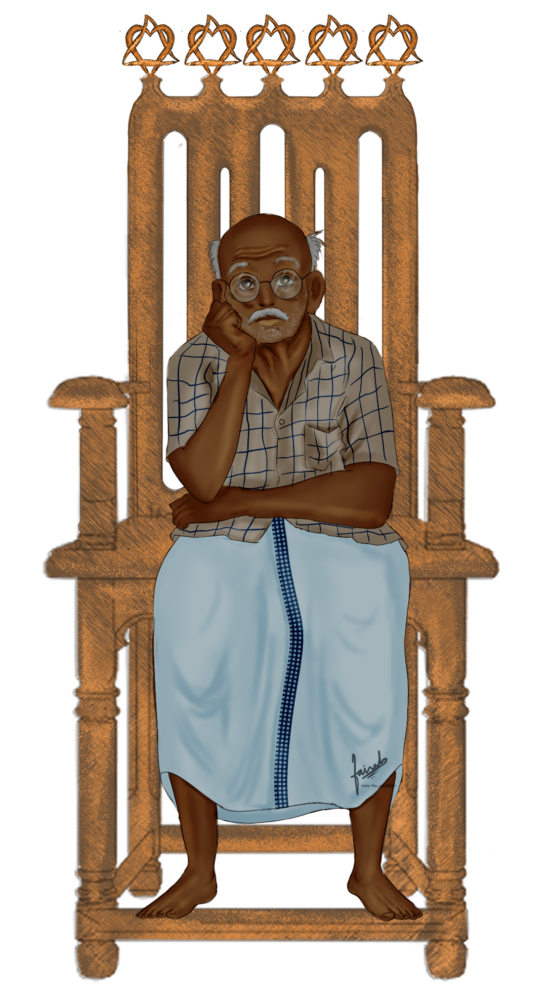
The Bengal delta, a sprawling aqueous labyrinth where the salt tides of the Bay of Bengal collide with the ancient, smoke-laden chants of the tantrika, is no mere administrative geography. It is a sacralised field of force. The throne of Bengal has never been a secular chair, atleast the underlying forces has never been so. It is a pīṭha, an altar where the sovereign is merely the foremost devotee of the Mother. Shakti, the Empress of the East, dictates the ebb and flow of authority here, her reign an eternal recurrence that defies the desiccated logic of dialectical materialism (Sarkar, 2021).
The cartography of this divine reign began with a cosmic dismemberment. When the divine discus of Vishnu carved the body of Sati, the fragments fell across the deltaic silt, transforming the physical landscape into a divine corpus (McDermott, 2001). These Shakti Pithas, seats of power are the true anchors of the state, serving as nodes of a sacred energy grid that administrative borders cannot contain. During the trauma of the 1947 Partition, the secret transfer of the Dhakeshwari Pitha from Dhaka to Kolkata was not just a religious relocation but was a desperate political act to keep the spiritual pulse of the throne beating within the new republic (Ramos, 2017).
The evolution of this reign found its kinetic synthesis in the nineteenth century. Bankim Chandra Chatterjee’s Anandamath documented a rebellion which constructed a political liberation myth that gendered the nation as a warrior deity (Chakraborty, 2022). His “Santans” or Children were not social workers but ascetic warriors who viewed the land as a blackened, fierce Mother garlanded with skulls, a visceral appropriation of Kali and Durga iconography (Mukherjee, 2020). The anthem Vande Mataram provided the liturgical foundation for a nationalism that demanded sacrifice, not just ballots. Materialist historians often attempt to dismiss this as “militant banditry,” yet they cannot erase the fact that these devotees were the first to link Shakti with the political unit of the nation (Chatterjee, 2009).
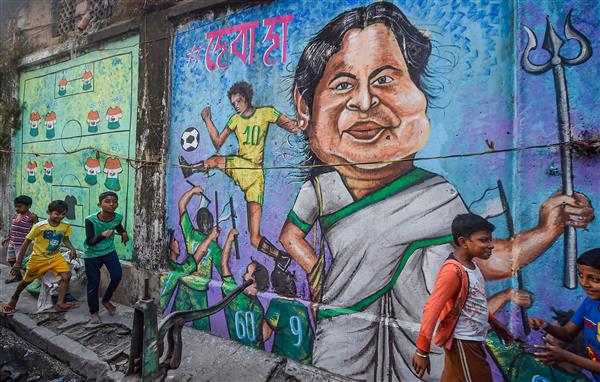
Modernity has not diluted this Shaktic essence but has merely provided it with new masks. Bengal witnessed transformation just as the calm Durga transforms into the fierce Chamunda at the 48-minute junction between the eighth and ninth days to slay the demons Chanda and Munda, the electorate invoked a destructive agency to uproot a stagnant regime they viewed as a spent force (Roy, 2024). Contemporary leadership has masterfully appropriated this “Political Asceticism” (Sarkar, 2021). The enactment of a Shaktic mandate where the ruler is the proteress of the household, a role that resonates far more deeply with the masses than the dry theories of the previous materialist masters (Sarkar, 2021).
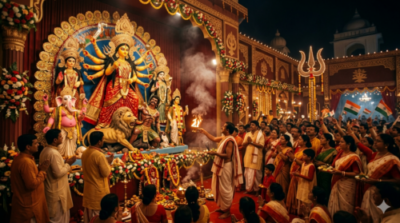
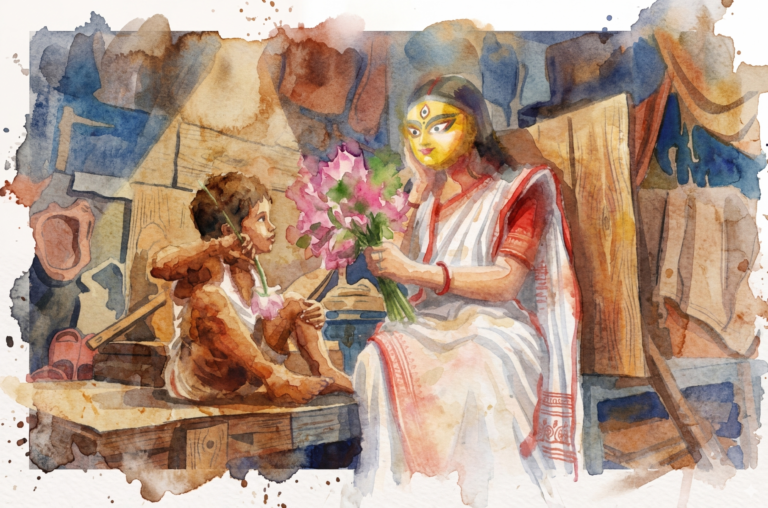
Consider the urban pandal. It is the new Parliament. In these temporary temples of bamboo and cloth, the state manages a spectacle that acts as a space vibrating with Shaktic intensity (De Matteis, 2021). The 2021 UNESCO inscription of Durga Puja as an intangible cultural heritage solidified this, yet the heart remains deeply rooted in local club patronage and political mobilisation (Majumdar, 2021). The government provides massive subsidies to thousands of Puja committees, turning a community ritual into a state-managed event of immense symbolic capital (Roy, 2025). It is a competition for legitimacy, mediated through the scent of incense and the thunder of the dhak (Rodrigues, 2003).
The burning ground, the shamshan, remains the primary metaphor for the Bengali heart. For the eighteenth-century poet Ramprasad Sen, the heart must be made a wasteland, desolate and alone, before the Goddess will descend to dance (McDermott, 2001). This theology of desolation informs the modern political theatre. Leaders must appear in a state of perpetual struggle, embodying the “street fighter” who has sacrificed personal happiness for the motherland (Sarkar, 2021). The materialist project collapsed here because it sought to regulate the “divine madness” of the delta. It could not govern a culture that celebrates the destructive aspect of time, or Kala (Sen, n.d.).
Across the interior districts, the antinomian world of Tarapith persists. It is a site where rituals involve the violation of purity codes and a “freewheeling” rhetoric that challenges social hierarchies (Bordeaux, 2024). The goddess Tara, who appeared to the “mad saint” Bamakhyapa, offers a subaltern holiness that remains accessible and local (Ramos, 2017). A revival of interest in the tantric roots of such sites suggests the Shaktic field is expanding. This is evident in the 2026 “Bongo Tribeni Kumbho Mohotosav” in Hooghly, where devotees revived a unique mela stopped seven centuries ago, a testament to resilience and the return to a Vedic-folk synthesis (Dutta, 2026).
The 2026 horizon presents a battle for the “Empress’s favor.” On one side, a masculine, national narrative attempts to introduce new symbols into a landscape traditionally ruled by the Mother. The counter-move is a retreat into sub-regional Shaktic pride. The state’s promotion of a “Durga Angan” and the inauguration of a Jagannath Temple in Digha to counter external pushes shows that the throne is always seeking divine sanction (Som, 2025).
The reign of Shakti is eternal because it is rooted in the “Throne of the Mother” (Strube, 2025). The political destiny of Bengal is not decided in the hallways of bureaucratic power but at the feet of the Goddess. The 108 lamps of Sandhi Puja remain the ultimate arbiter, symbolizing a light that survives ideological fatigue (Roy, 2024). The Empress of the East remains seated. Those who wish to rule her land must learn that in Bengal, the ballot box is always an extension of the altar. The delta’s story is not one of material progress alone, but of the “Children” trying to restore a pristine glory they believe was interrupted by foreign influences (Mukherjee, 2020).
References (APA 7th ed.)
- Bordeaux, J. (2024). Footprints in the burning ground: The memory of Buddhism in Tarapith. Journal of Hindu Studies, 17(2), 175-198.
- Chakraborty, S. (2022). Politics of fictionalizing history: A study of Bankim Chandra Chatterjee’s Anandamath. ResearchGate.
- Chatterjee, B. C. (2009). Anandamath, or The sacred brotherhood (A. Ghosh & B. K. Ghose, Trans.). Oxford University Press. (Original work published 1882).
- De Matteis, F. (2021). When Durga strikes: The affective space of Kolkata’s holy festival. Ambiances.
- Dutta, D. (2026, January 31). A story of Hindu resilience and revival: How a unique Kumbh Mela was brought to life in Bengal after 700 years. OpIndia.
- Majumdar, T. G. (2021). History and evolution of Durga worship in Bengal. Journal of History, Art and Archaeology, 1(2), 143–149.
- McDermott, R. F. (2001). Mother of my heart, daughter of my dreams: Kali and Uma in the devotional poetry of Bengal. Oxford University Press.
- Mukherjee, M. (2020). Bankim Chandra Chatterjee and the nationalist imagination. Scribd.
- Ramos, I. (2017). Pilgrimage and politics in colonial Bengal: The myth of the goddess Sati. Routledge.
- Rodrigues, H. P. (2003). Ritual worship of the great goddess: The liturgy of the Durga Puja with interpretations. SUNY Press.
- Roy, I. (2024, October 12). Durgotsav: The real reason 108 diyas are lit during Sandhi Puja. The Indian Express.
- Sarkar, T. (2021). The political asceticism of Mamata Banerjee: Female populist leadership in contemporary India. Politics & Gender, 18(4), 1017-1044.
- Sen, R. (n.d.). The heart of the devotee. (Trans. J. Woodroffe).
- Som, M. (2025, October 23). Protests erupt in West Bengal’s Kakdwip over ‘desecrated idol’. The Hindu.
- Strube, J. (2025). Global Tantra: Religion, science, and nationalism in colonial modernity. Oxford University Press.
- Voice of Bengal. (2025, November 8). The Calcutta High Court curtails animal sacrifice at Bolla Kali Puja. HinduPost.

 Login
Login