


Free-riders of Freedom: Political parties

Srinath Rao P is the Founding Editor of The ArmChair Journal. He is currently at the University of Chicago and is an alumnus of IIT Madras, Ashoka University, Rishihood University, and Purdue University.
In a liberal democracy when political parties compete, citizens are expected to get the best ‘benefit’, expressed in utilitarian terms. It is similar to how bidders compete and provide the highest price to the government to avail a unique service the state is in control of, or how companies compete to provide tooth paste at the cheapest price to consumers. As such, political party competition only constitutes an important feature of the vibrancy of a democracy.
However, this design of competition for a liberal democracy sometimes means that citizens mimic consumers and political parties mimic companies. This makes citizens as beneficiaries of governance rather than as participants. Of course, consumers can participate in production as the working classes, and citizens can participate in electing the government as voters. But that does not mean that workers control the means of production or voters form the government either.
If we take specific countries for instance, in the United States of America, it is two big political parties that provide these benefits to people. In India, there could be around 10 different parties at different levels and in different regions that compete. Despite its diversity, in Indian politics, the possibility to conceptualize voters as a consumer is getting more and more dominant with the growing influence of cash transfer schemes over the last few years.
A distinctive feature of cash transfers is that it borrows support from many sides of the political spectrum. Those pro-market see an increase in purchasing power of consumers or households and hence a larger market to build private enterprises. Unlike demand driven schemes like MGNREGA (Now VB-G Ram G), citizens also get freedom to enhance their life decisions without any conditions being associated with how they must spend the money or earn it, attracting the support of liberals. Those on the socialist side see a direct redistribution of wealth or at least tax income with efficient transfer of money. It is almost impossible to say No to them at face value. So, support of all political parties means that criticism cannot find its way into public discourse.
States failing themselves
The case of how Andhra Pradesh (a state in India) came to provide the highest social security pensions in India helps us understand this better.
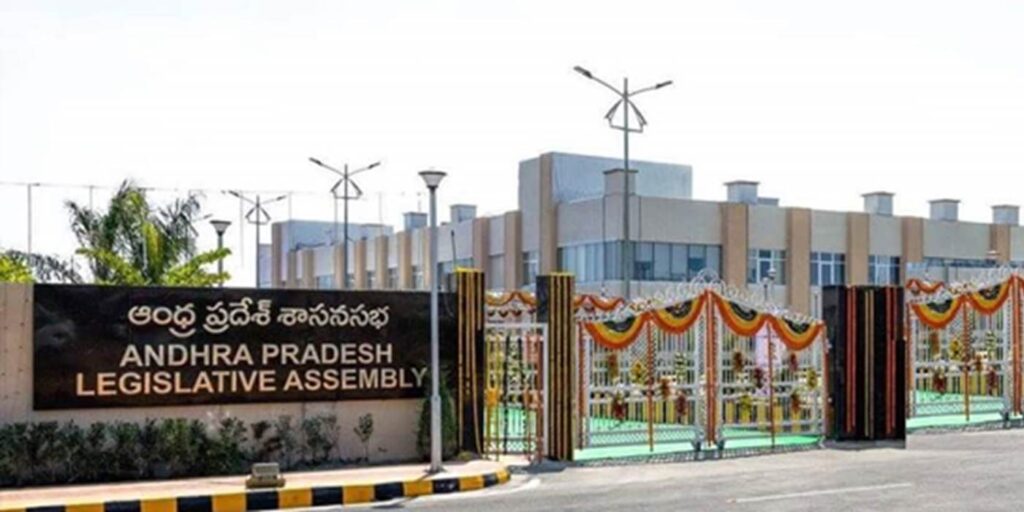
In 2014, Mr. Chandrababu Naidu came to power and increased pension to Rs. 1000 from Rs. 200 keeping his election promise to increase old age and social security pensions for various categories. Then, Mr. Jagan Mohan Reddy, the leader of the opposition party, promised he would increase it to Rs. 2000 if he comes to power in 2019 elections. Concerned about losing voters even after implementing his election promise, Mr. Naidu increased the pension himself to Rs. 2000 per month ahead of the elections to nullify Mr. Reddy’s. However, Mr. Reddy went ahead and said he would increase it further to Rs. 3000 per month if he comes to power. Mr. Naidu did not go further and also happened to lose the assembly election in 2019. The saga does not end.
After coming to power, Mr. Reddy increased pension as promised to Rs. 3000, though in a sequential manner by 2023-24. Then in opposition, Mr. Naidu promised he would increase it to Rs. 4000 if he came to power in 2024. Appearing not so confident while presenting his manifesto for 2024 elections, the incumbent Reddy did not offer to match the amount and just promised to increase it to Rs. 3500 only if he’s elected back. Mr. Naidu came to power in 2024. Both parties competed to provide the highest price to consumers. Mr. Naidu fulfilled the promise of having Rs. 4000 per month as old age and social security pensions. As a result, even without a particular socialist party, Andhra Pradesh stands at the top with highest social security pensions in India today, though the state has the lowest per capita income among south Indian states and not even in the top 10 in the country.
The scene is not too different in other states of India and is directly proportional to the competition level between political parties. If parties perceive strong competition, they take drastic measures. In Bihar, in the recently concluded elections, the incumbent transferred Rs. 10,000 to millions of women voters. In Maharashtra, the incumbent transferred Rs. 2500 per month to woman above 18 years of age ahead of the elections. This bidding for women voters was interestingly done by parties from the NDA block led by the Bharatiya Janata Party that are perceived a bit less popular on the welfare front when compared to the Indian National Congress led block. Nevertheless, bidding prevailed as ultimately the desperation to win the election prevailed beyond gains associated with reputation. Madhya Pradesh, Karnataka, Delhi, Kerala, Telangana, Tamil Nadu, Jharkhand, Assam and West Bengal also add to this list.
As the central government has a larger pool of resources and decision making powers, state finances are more vulnerable to this competition. 12 Indian states are projected to spend ₹1.68 lakh crore on unconditional cash transfers to women in FY 2025–26 alone as per a PRS report. This expenditure could seriously undermine the development in states.
Welfare is not new to India. But compared to probably a decade ago when welfare was more difficult to reach the poor because of administrative inefficiencies or leakage of funds or enrolment of beneficiaries, cash transfers are today more real in the benefit they provide to voters. With bank accounts, web applications and databases, it is easier to enroll, it is easier to plug leakages, and it is easier to ensure money reaches the real beneficiaries. Voters feel a lot more definite benefit in availing these schemes.
While the end consumer appears to benefit from the competition between political parties, it may not be the best case scenario – if it is a general agreement that GDP growth is essential in a medium to long run – as it provides more opportunities to the youth, provides more taxes to the government at large, and aids the overall capacity of the economy to cater to individual agencies of its beloved people.
Undermining state capacity
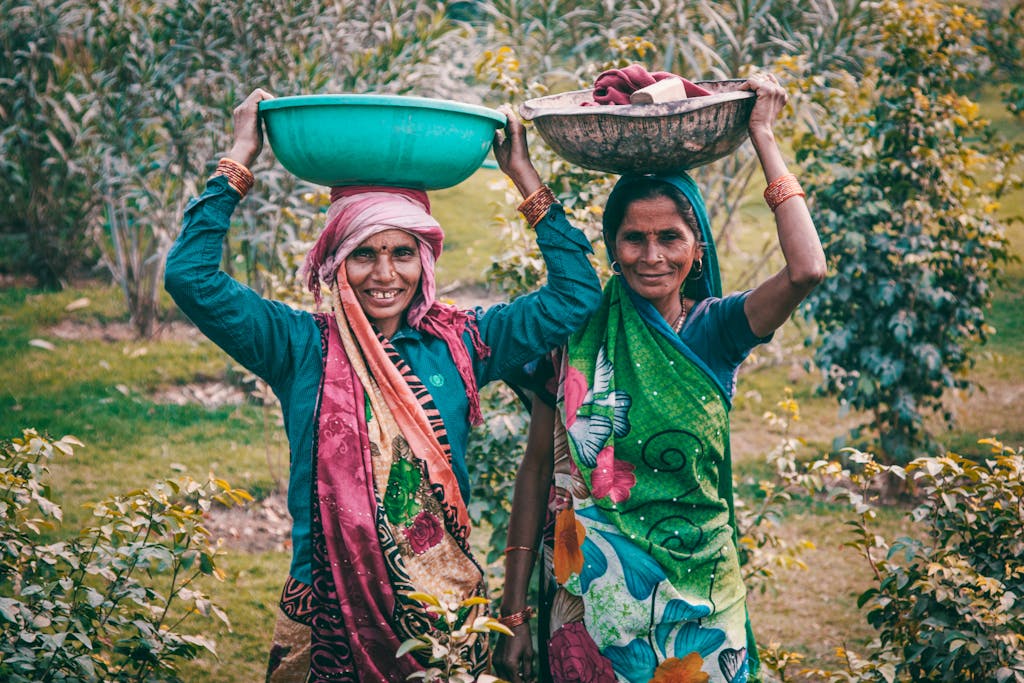
Yes, cash transfers to vulnerable sections, especially women can be empowering. But it has a trade-off with GDP growth, especially in contrast with programs like MGNREGA which have a more balanced approach. Large revenue spending compromises GDP growth. Reserve Bank of India reports (Box II.2 in this) on public spending suggest that money spent by the government on capital expenditure is more productive than revenue expenditure, when measured against their impact on GDP with peak multipliers 3.84 and 1.83 respectively. In other words, Rs. 1 spent by the government on capital expenditure translates to Rs. 3.84 in economic productivity while to only Rs. 1.83 when it is spent on revenue expenditure.
However, the voter is driven by immediate gratification and can’t wait for an abstract notion of GDP that is expected to rise and provide new opportunities to them in a medium to long run. In fact, why would an old pensioner be benefitted by fine roads when s/he does not use a vehicle or is struggling to walk. Nevertheless, parties are caught in this auction to provide their product to voters across different categories – not just old age pensioners. As the budgets grow, the competition between parties means cash transfers could only keep rising. If not old age pensioners, cash transfers keep shifting to women above the age of 18, then to unemployed youth, and then to slabs within categories, etc.
There might be a problem here. The effect of this competition is a reduction of capacity of state in influencing areas where it is better positioned to influence. On one hand, the idea of a surveillance state becomes more and more feared with usage of technology by governments to hold citizens under trial. On the other hand, the state is also deprived of its capacity to make effective change as its coffers are constrained to be used at their discretion. Except for bare minimum services like maintaining general public safety or defence, it becomes impractical for the state to make effective changes to public good. Interestingly, both aspects of governance are aided by technology.
In all its magnanimity, the capacity of the modern liberal state is constrained when it has no funds. It has to rely more and more on big corporations on PPP modes to deliver services to people. PPP mode may be fine but in this flow, governments can risk losing their capabilities to be an agenda setter as the interest of private players becomes a prerequisite for any project to be taken up.
A case in point is the lack of tenders for the development of medical colleges in Andhra Pradesh in a PPP mode. Instead of the government calling for tenders, private players themselves can start defining the project that can be taken up by the government. In such a scenario, liberal democracy operates hand in glove with large corporations as in the United States. This has strong echoes of the ‘Military Industrial Complex’, where state policy becomes subservient to corporate interests.
It is usually impossible for the ruling party and the opposition parties to coordinate in a liberal democracy. While in matters of foreign policy, a general agreement without open dissent is part of public discourse, in domestic policy matters, the role of opposition inevitably has to be about criticizing the government. When the opposition has a more collaborative approach to their role, they would cease their relevance as a general critic or a constructive critic.
When the opposition stops criticizing, it can reflect a less dynamic democracy without multiple ideas being debated. It can also risk turning exclusive, and unrepresentative of the needs of a diverse society. Betting on an opposition that criticizes is more effective for collective life than an opposition that is ready to merge with the ruling party. By emphasizing disagreement, the opposition also provides scope and force for new ideas. However, this character of an opposition party also means even if ideas may exist, practical politics makes it difficult to take advantage of them.
A situation where political parties expected to improve state efficiency by holding each other accountable, actually end up creating the problem themselves.
The Free-Rider problem

Except for incentives to states from the central government towards capital expenditure, remaining expenditure will move towards unconditional cash transfers. Instead of categorizing it as a general weakness, I would like to categorize this as a free-rider problem. Because the parties do not trust each other and have an incentive in free-riding, they end up in a situation where the collective benefit of society is undermined.
This is a classic collective action problem where parties prefer to free ride on each other rather than operating restraint. Where both individuals have an incentive in not having any restraint and also get benefitted when others follow restraint. So, they don’t go for restraint but end up proposing cash transfers – one aims to propose more than the other.
Rank preferences for each party on proposing cash transfers restraining from it:
- I propose cash transfers and opponent restrains: Increases my winnability
- I propose and opponent also proposes: Both of us have lower funds to spend even if either of us wins
- I restrain and opponent restraints too: Both of us have highest funds to spend if we win
- I restrain and opponent proposes: Increases my loss chances
The following table suggests how the equilibrium state for political parties inevitably is to propose cash transfers as much as possible.
| Rank Preferences of competing parties | Political Party 2 | ||
| Proposes cash transfers | Restrains from proposing | ||
| Political Party 1 | Proposes | 2,2 (equilibrium) | 4,1 |
| Restrains | 1,4 | 3,3 | |
A general accommodation with liberal democracy is that it allows for democratic forms of dissent like protest, thereby slowing down policy execution. To contrast better, it is seen that China under a one party rule could install/erect hospitals over a weekend, but India could just be caught up on land acquisition works for years.
However, in this case, liberal democracy becomes inefficient not only because people resist authoritarian tendencies in policy execution, but also because the self interest of political parties can also steer it towards a reduced capability of the state. And the scale of this inefficiency is significant considering the budgeted amounts. Thereby making it inevitable that the private sector has to be a partner in overall socio economic development. The state loses its capacity to govern without the support of large corporations – because they have to take up large infrastructure projects on state’s behalf or at its behest not merely for execution but more substantively to invest their own funds as there is minimum capital expenditure contribution from the state. Thereby, success of the state would be contingent on the success of corporations.
This expenditure raised through private corporations is an additional burden on citizens over and above the taxation money that states levy on citizens. For instance, it may be understandable if the state takes the support of the private sector to construct roads in a PPP mode for reasons like the state lacking the technology, or has no human resource, or has better expertise managing finances, etc. But if the state can’t even invest in a proper and cheaper public transport, citizens need to spend more on private transportation or own vehicles while paying higher ticket prices as well as toll gate fees. No wonder, the interest of large corporations becomes a pre-requisite for economic growth of the region. Reduced state capacity also seeps into areas like funding to public universities, funds to local governments to run critical infrastructure like water treatment plants, utilities, etc. This arrangement further strengthens the nexus and interdependence between political parties and corporations. This might appear normal, because, after all, why should the private sector be seen with skepticism! After all, the private sector is a friend of liberals, unlike socialists.
After a point, the state risks losing control of setting the agenda. The state loses its ability to set the agenda and the optimal point of interaction will be influenced more by the private sector than by the state. In a liberal democracy, when the state loses its agenda, it effectively means people lose their ability to set the agenda as well, effectively betraying the democratic line of liberals.
In practical politics in India, for instance, if a particular corporate entity chooses not to invest in a project in a state in India or invest with a reduced pace, it can shape local politics of the state and even change governments. For instance, the state governments have to plead someone like Adani to come and invest in their state for its growth, and the state itself lacks options to negotiate.
This also means, the political party and private corporation can have an understanding. Let’s say, a private corporation wins the tender for a project under a government, it can choose to slow down pace of work (though with consequences) for various reasons if the terms of unwritten MoUs don’t sustain when the government changes. So, politicians also invest in trustable corporate allies, though corporate interests may or may not align with policy interests. More on business – politician nexus is discussed in another article here.
Incentives or regulations?
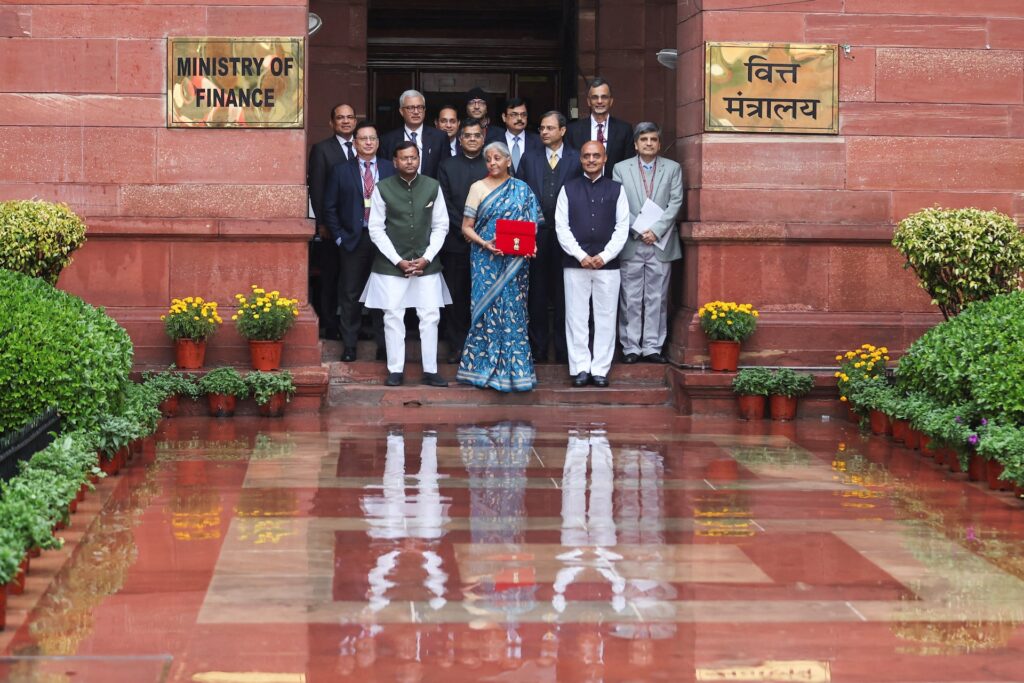
Once given, it is difficult to take back cash transfer benefits to citizens as it would lead to distrust and dissatisfaction among people vis-a-vis the party that makes that choice. So, it becomes difficult to divert this pool of money.
Definitely, new laws like the Fiscal Responsibility and Budget Management (FRBM) Act can improve scenarios by limiting the freedom of political parties to cap their revenue expenditures better.
So, should we just avoid the problem from becoming worse with incentives like the already existing incentives for capital expenditure from central government to state governments? But the problem seems recursive. The central government too, some day, under pressure to stay in power can ease cash transfers further. BJP government’s PM-Kisan scheme itself is a pioneer in this respect.
Should we cap them in a more comprehensive way with laws and constitutional amendments? Of course, there is nothing wrong about society being governed by laws. Rule of Law is the most vital feature of democracy.
The purpose of law in this case is to make parties act in a predictable manner by placing restraints on them and preventing things from getting worse. Such laws can serve more like competition laws in the sense that they avoid situations where benefits to consumers are reduced because of natural behavior of companies to come together and form a cartel. The only difference is that political parties lower the benefit to consumers not through coordination by forming a cartel but through competition.
Does such a rationalization not focussed on society but on checking the competition between political parties also serves society at large? Are the goals not different?
In fact, such laws which could limit welfare spending could even be called anti-democratic simply for the reason that it could compromise the general will of future generations. On the other hand, laws like the FRBM could be seen as laws that secure the general will of future generations by reducing public debt. So, how democratic would such a law be, even when it sticks to procedural aspects?
Just another liberal confusion, towards strengthening itself – this one on the nature of political parties!


 Login
Login