

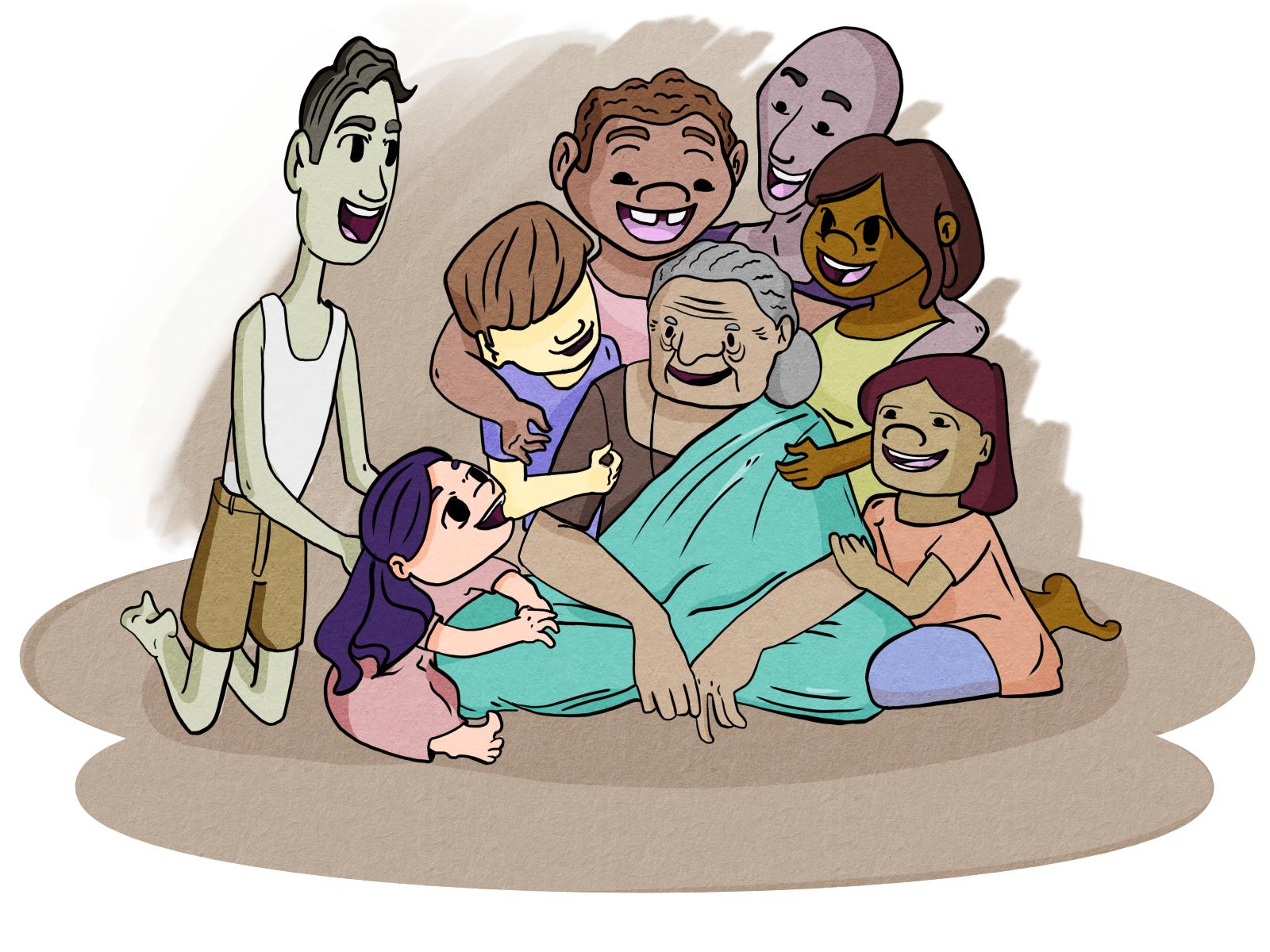
Democracy, Debt, Disenchantment and the Middle

Abhirup Roy is an undergraduate student of Political Science at St. Xavier’s College (Autonomous), Kolkata, with interests in International Relations and global power politics.
Were globalisation a skyscraper, the middle-class would be its scaffolding – used during the construction and discarded as debris thereafter. Consummate in social life, the ‘middle’ was destined to lead, to guide—until it encountered precarity. Perhaps until Caesar found Brutus in the pretense of the ‘New-Market’.
Globalisation, with the ‘middle-class’ as its primary beneficiary, now ironically hangs by a thread of existence. The reason is conspicuous – the uneven distribution of the ‘fruit’ of globalisation. According to an enquiry by Pleninger, De Haan and Sturm, it is only the coffers of the upper-echelon (20%) that receives this nourishment whereas the rest navigate the uncertainties in pursuit of their share of ‘Bread and Roses’. This discrepancy in treatment can be best painted using Branko Milanović’s ‘Elephant Curve’ (2013) – The floor was raised, and so was the ceiling, and what remained within was a hollow and disenchanted middle.
There are three kinds of lies: lies, damned lies, and statistics
Benjamin Disraeli
In India, the numbers are sombre: 75% of this ‘middle’(Lower-Middle Class) in India lives at 2-4 $ USD/day(PPP), with the global poverty indices breathing down its neck (East Asia Forum). With the gradual withdrawal of the state from 1991, the Indian middle-class today is left without its former sense of security and predictability. Its composure now rests on the ephemeral convenience of credit cards and EMIs.
The higher stratum has globalised its assets whereas the middle seems to have globalised its vulnerabilities. One could discern this discomfort through a car-loan that stretches across almost a decade – one that doesn’t let you sit in the comfort of your new wheels. One can sense it when the fear of EMIs outstrips the joy of housewarming. They live just a lay-off apart from collapse. Moreover, with the rise of an ideal Instagrammable life there is a constant yet invisible current to situate oneself at the heart of what the society considers social-media worthy. The rise of ‘Buy Now Pay Later’ (BNPL) facilities by fintech platforms, instant loan sanctions act as a positive catalyst to pursue what is luxurious (Mobiles from Apple, Bags from Chanel, Shoes from Louis Vuitton) which creates an illusion of purchasing power, but let’s be frank, is it really so?
Numbers have always been deceptive. The surge in consumption patterns today, might signal a capable and renewed strength, as far as purchase is concerned. However, it is in this charade of digits that we meet a greater question– does greater consumption mean a renewed fiscal strength? Or, does it rather highlight greater public debt?
The answer, one can be certain, is oft-times revealed in the wee hours of the day. That is when the ‘Middle-Class’ places its forefinger upon ‘Check-Balance’, peradventure to ensure they are still afloat. This transition from a modest ‘Boroline’ to an aspirational ‘Skincare’ seems to have provided social reassurance, but financial security? Perhaps not.
The middle-class has always been a testament to prosperity and dignity, a personification of social-equilibrium. Its consumption patterns hitherto, highlight an illusion of stability but its politics seemingly and considerably tilts towards an exclusion that is motivated by the dilution of its foundational temper founded in economic calm – seeking succour in ‘nationalism’ and ‘conservatism’.
The cheapest sort of pride is national pride; for if a man is proud of his own nation, it argues that he has no qualities of his own of which he can be proud
Schopenhauer
The middle-class, quite evidently, has been deracinated from its calm, its character. With all of it diluted, it now oscillates between populism and delirium. From Brexit to Trumpism, from France’s Yellow Vests to India’s middle-class nationalism, the manifestations appear distinct, yet they share a core element of resentment: A class’s spasm at being forgotten and alienated. The key tenets of the middle-class are hard work, civility, and restraint which makes it a trustworthy yardstick in social life; however, this moral edifice has been replaced by the market’s cold CVs (Curriculum Vitae) – as thin and uncertain as it gets, balancing itself on a rope of performance, with an ocean of disquietude beneath.
The sacrosanct notion of ‘meritocracy’ too, faces erasure. In a global order that prioritises capital over labour, and inheritance over effort, this class finds itself trapped in anxiety. They are courted during elections and discarded thereafter.
Democracy which was the middle-class’s forte, now stands estranged. It has descended to a theatre to express a futile and momentary anxiety which in the long run is nothing but a route to dissipation. Unlike the traditional way to articulate a direction through deliberation its erosion now is not only procedural but moral and ideological. There is neither vision nor rigour, rather it is a constant putrefaction of conviction and vivid disillusionment that adorns the ‘middle-class’. With this economic derailment, it seeks comfort in identity ownership. When economic dignity lingers around uncertainty, merit provides little self-worth, identity then offers a compensatory relief – like an opiate, a painkiller. To quote Schopenhauer, Nation and Culture provide recognition without the toil of redistribution, pride without a concomitant protection and belonging without any commensurate guarantee. Dare one say, this presumably propels ‘cultural majoritarianism’ – resentment at the elites above, and the ‘welfare dependent poor’ below, perceiving themselves, perhaps, as a ‘sandwiched class’.
The Gramscian ‘War of Position’ no longer unfolds itself in Unions but in ‘WhatsApp Groups’ and forwards, moralising inequality and rendering governance to mere optics. A vivid display of the decline in the ‘instrumental’ role of politics and democracy is the recent debate on ‘Vande-Mataram’ which was expected to span across 10 hours. It’s needless to explicate the intent here as it interestingly weaponizes identity as a currency for the impending state elections. However, the irony is that large chunks of the ‘middle’ often devour such exercises as they otherwise starve of stability and certainty in a ferociously capitalist society dominated by free(?) markets. Unsurprisingly, the political leadership of the day is busy highlighting the cultural importance of this Nation like the motivated preference of Bharat over India in official discourse.
This happy breed of men…’ (?)
William Shakespeare, This England
Hence, the middle-class endures in numbers but saunters towards oblivion quite ideologically. This gentry, this ‘happy breed of men’ once destined to create the ‘other Eden’ might have swelled in numbers but it has grown frugal. This custodian of democracy, society and moreover, of ‘humane existence’ now remains, if one may say, as a ‘fallen angel’ – once divine, but now finds itself trapped between the apex and the floor, yearns for redemption yet unable to return, as debt and resentment devour its grace. It will still move, vote, consume, and aspire, and therefore exist, but perhaps like the ‘Petra in Jordan’ – dead without death. As Yeats had once written – ‘Things fall apart; the centre cannot hold’ (The Second Coming).
 Login
Login