Beyond school syllabi: Curiosity and care in early years
The early years are not a rehearsal for “real school”; they are school. Drawing on classical and contemporary thought from Tagore, Froebel, Gijubhai Badheka, and Piaget to recent neuroscience, this essay argues for a child-centred, movement-rich, curiosity-driven approach to early childhood education in India. It proposes the Panchakosha framework as a culturally rooted way to connect brain science with holistic pedagogy and offers practical principles for classrooms and homes. The goal is not to produce compliant children but to nurture capable, compassionate learners who inquire, can regulate emotion, and act to different situations with sensitivity in a plural society.
If we want children to grow into strong and thoughtful adults, we must first respect their world and experiences. They are not empty cups to be filled with information but active learners who make sense of life through their bodies, emotions, and language. When we nurture their curiosity, allow them to move freely, and give them small choices, it shapes not just their memory but also their brain development and sense of self. On the other hand, keeping children passive through too much screen time, rigid rules, and limited play dulls their wonder and weakens their motivation. A meaningful early childhood curriculum, therefore, should bring together what science tells us about brain growth, what educational traditions teach us about play and freedom, and what the Indian idea of Panchakosha shows us about growth across body, energy, emotions, thought, and joy.
The early years of a child’s life are very important for their growth. The way we talk to them, the activities we encourage, and the respect we show for their questions are all part of how they learn and develop.
Neuroscience does not give teachers a rulebook, but it does give us important insights. In early childhood, the brain is incredibly flexible. Neural connections grow quickly with meaningful stimulation and fade when unused. Simple back-and-forth interactions help children develop language, self-control, and social skills. Sharing stories, songs, and moments of attention is real brain food. On the other hand, monotony, neglect, and too much unsupervised screen time reduce curiosity and weaken attention. The lesson here is not that technology is always harmful, but that children need people more than they need programs.
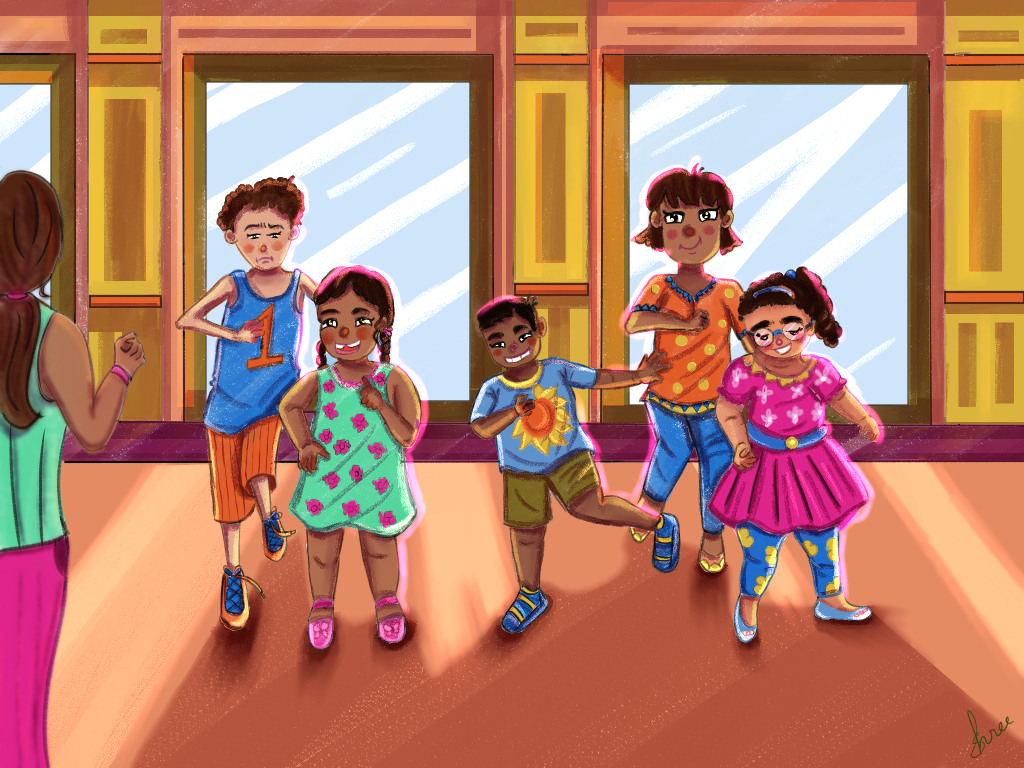
Movement is also part of learning. A classroom that forces children to sit still misunderstands how their minds grow. When children hop while counting, clap rhythms to learn words, or act out a story with their bodies, they connect movement, language, and memory. The body is not just a carrier for the brain—it is the brain’s first school. Physical play helps transform abstract ideas into real, felt experiences. Denying children movement limits both their energy and their intelligence.
Curiosity is the fuel of learning, yet it is often stifled. Sometimes teachers rush to complete the syllabus, sometimes they are uncomfortable with too many questions. A healthy classroom treats questions with playfulness and patience, but in both cases sends the same message: your “why” is welcome. When children’s questions are valued, they learn that inquiry is not an attack but a contribution to shared understanding. Piaget described the child as a “little scientist,” learning by doing and testing ideas. Whether or not we agree with all his theories, the point remains that children think best through action, and they grow when adults create environments where exploration is possible. Tagore too imagined schools as places of joy, freedom, and beauty, alive to nature and the arts, reminding us that curiosity flourishes not only in accuracy but also in wonder.
Philosophers and educators have long offered guiding principles that remain relevant today. Tagore saw education as nurturing the whole person, not just teaching correctness. He wanted harmony with the world through music, nature, and craft, a slower rhythm than the treadmill of modern schooling. Froebel, who founded the kindergarten, created learning materials for open play and activities to foster collaboration. In India, his ideas can be brought alive with local materials like shells, seeds, clay, rangoli, rhythm, and folk games. Gijubhai Badheka, often called the Montessori of India, built early education around freedom, storytelling, and tenderness, arguing against a rigid system obsessed with compliance. His vision fits well with Gandhi’s idea of learning by doing, something many schools speak of but rarely practice. Piaget reminded us that children build new knowledge on top of what they already know, so teachers should design tasks that are just hard enough to stretch them but not so hard that they fail. All of these thinkers converge on one ethic: being child-centred does not mean spoiling children, but paying attention to their perspective, pace, and prior knowledge.
Indian philosophy also offers a useful bridge through the Panchakosha, which describes five layers of human existence. The first is the physical body, shaped by food, sleep, senses, and play. The second is vital energy, expressed through breath, rhythm, and movement. The third is the emotional-mental layer, built through relationships, stories, and feelings. The fourth is the intellect, where curiosity, reasoning, and problem-solving grow. The fifth is bliss, the joy that comes when learning feels meaningful and connected to values. Panchakosha is not just theory; it can guide practical teaching. For example, if a teacher designs a unit on water, children can explore it through play with pouring and measuring, rhythm games about rain, stories about rivers, questions about floating and sinking, and a shared ritual of gratitude for water. This approach avoids reducing learning to worksheets and instead engages body, breath, feeling, thought, and meaning together.
Another important part of early education is giving children autonomy. Independence is not something to wait for until they are older. When a four-year-old chooses a book corner, pours water, or tidies up on their own, they are not just practicing skills but also receiving trust: the message that “we believe you can.” Constant micromanagement communicates mistrust and undermines confidence. What children need is guided autonomy which means choices within a structure so that they learn initiative alongside responsibility.
Gender sensitivity must also start early. Preschool is already social, and the assumption that care is only women’s work is limiting. Encouraging more men into early childhood education widens children’s sense of who can comfort, teach, and guide. Classroom materials also matter, for example charts showing only girls cooking and boys driving, or stories that assign bravery to boys and softness to girls, silently shape children’s futures. Gender-neutral and expansive materials instead allow children to imagine freely without fear of crossing invisible lines.
Teachers also need strong communication with parents. Difficult conversations often become confrontational when children are labelled as weak or problematic. A more constructive approach is to frame concerns as obstacles to growth and to invite parents as partners in finding solutions. Early intervention is not blame, but hope. Parents too can strengthen this partnership by asking teachers how to support learning at home. When teachers, children, and parents all feel respected, the triangle of support becomes strong.
Assessment is another area that needs rethinking. Stars and grades are easy to hand out but do not say much. A vocabulary like Beginner, Progressing, Proficient, and Advanced signals growth instead of ranking children against one another. Short narrative comments that describe behaviours and give next steps provide richer information than symbols. This shift helps build a culture where mistakes are seen as part of learning rather than as failures.
Language is not just a tool of communication but a way of seeing the world. Research shows that language shapes attention and thought. This insight can be used in classrooms through bilingual routines that honour home languages, rich conversations that expand children’s vocabulary, and metaphors that broaden imagination. India’s multilingual reality is a strength, not a barrier. When teachers move fluidly between English and local languages, they make learning more inclusive, not by lowering standards but by opening more doors.
These ideas must show up in everyday practice. A school day might begin with a circle of movement, rhythm, and breathing. Lessons can be designed as dialogues, with spaces for children to share and wonder aloud. A shelf can be kept for questions, ensuring curiosity is valued and returned to. Open-ended materials like blocks, clay, seeds, and fabric can be rotated to keep creativity alive. Children can be offered structured choices, like starting at the puzzle table, before gathering as a group. Assessment can be done through quick notes, photos, or children’s own words, always reported in growth language. Families can be invited as co-educators with simple tasks like interviewing grandparents about childhood games or cooking together while counting spoons. Teachers can regularly check classroom books and charts for gender bias and replace narrow stereotypes with wider possibilities. If digital tools are used, they should focus on creation, like recording stories, rather than passive consumption. Each day can end with a short ritual of gratitude, song, or reflection, tying learning together across all Panchakosha layers.
For all this to succeed, systemic support matters. Policy documents like India’s NEP 2020 already highlight the importance of early childhood care and education, but translating policy into practice requires three shifts. Teachers need time for planning and reflection, not just teaching. Schools must fund ongoing professional development like workshops and peer observation. Communities—through libraries, museums, parent groups, and anganwadis—must be partners, extending learning beyond the classroom and reducing pressure on schools to cover everything alone.
Tagore once wrote that the highest education brings life into harmony with all existence. Early childhood education is where this harmony can begin—in the rhythm of a poem, the dignity of a child pouring their own water, the joy of laughter after a bold question, or the quiet focus of building something from almost nothing. The first school is the body, the first textbook is the world, and the first test is how kindly we respond to a child’s question. If we truly teach as if the future is in small hands, as it is, we will create classrooms that are safer, braver, and more joyful, and we will raise not only children who can answer but also citizens who know how to ask.
References
- American Academy of Pediatrics. (2016, reaffirmed 2019). Media and Young Minds.
- Badheka, G. (1931/2004). Divaswapna (Daydream). Navjivan / various English trans.
- Boroditsky, L. (2010). How language shapes thought (TED Talk) and related essays (2011).
- Center on the Developing Child at Harvard University. Serve and Return Interaction Shapes Brain Architecture.
- Froebel, F. (1887/2005). The Education of Man (trans. Hailmann). Dover.
- Piaget, J. (1952). The Origins of Intelligence in Children. International Universities Press.
- Shonkoff, J. & Phillips, D. (2000). From Neurons to Neighborhoods. National Academies Press.
- Tagore, R. (1929/2003). Personality and writings on Shantiniketan. Rupa / Visva-Bharati selections.
- Taittirīya Upaniṣad (on Panchakosha), standard translations.

 Login
Login