
Geopolitics of Arab – Israel peace

[responsivevoice_button voice=”US English Male” buttontext=”Read out this Theel for me”]
The United Arab Emirates (UAE) & Bahrain took the historic step to normalise relations with Israel, their long-time foe. The ‘Abraham Accords’, named after the legendary prophet common to Islam, Christianity & Judaism, was mediated by the United States (US) and seek to secure peace and stability in a conventionally troubled region. The accords follow early successful mediation efforts by the Americans vis-à-vis Israel: 1978 ‘Camp David Accords’ with Egypt, 1994 ‘Wadi Araba Treaty’ with Jordan, and 1993/1995 ‘Oslo Accords’ with Palestine Liberation Organization. There are speculations of other Arab countries, like Oman, Morocco & Sudan, following suit. In this article, I attempt to analyze the evolving peace dynamic in the Middle East and its implications on various geopolitical players with competing & converging interests.
Historical Perspective
The modern-day disputes in the Middle East can be largely attributed to the 1916 ‘Sykes-Picot Agreement’. Conceived amidst the First World War, the agreement partitioned the provinces/regions of the Ottoman Empire and redrew the political boundaries. This resulted in the creation of artificial states without due consideration for the ethnic and sectarian realities of the region. Around the same time in 1917, the ‘Balfour Declaration’ demonstrated the intention of the United Kingdom, the foremost colonial power, to create a Jewish homeland in Palestine. Subsequently, the League of Nations’ mandate of Palestine consolidated the British resolve towards this cause. The horrific revelations of the Holocaust during the Second World War accelerated the process and consequently, the State of Israel came into existence in 1948.
Since then, Israel and the Arab world have been at loggerheads with each other. The wars of 1948, 1967, and 1973 are testimonies to the hostile relations between the two. The conflict between Israelis and Palestinian Arabs continue to this day. The conflicts haven’t been restricted to state players. Popular protests during the Arab Spring led to the downfall of unpopular regimes/governments in several countries. The rise of fundamentalist groups like Al-Qaeda, Islamic State (ISIS), and their affiliates further complicate the problem.
Opposition
The Palestinian National Authority, Iran, Turkey & Qatar have vehemently opposed the deal. Palestinians see the deal as treachery by Arab friends and a final nail in the coffin of their aspirations for statehood. The deal invokes a commitment from the Israelis to withhold annexation and expansion of settlements in the West Bank. However, if Israel’s past behavior is any indicator, settlements will continue unhindered which may derail the peace process.
Turkey’s renouncement of the accords is ironical, provided its own well established diplomatic relations with Israel. It is, however, not surprising. Turkey’s position is in line with President Erdoğan’s efforts to revive his county’s Islamist credentials and resurrect its influence that the country once enjoyed during Ottoman times. The redesignation of ‘Hagia Sophia’ from a museum to a mosque is among steps that symbolise Turkey’s eroding secularism and its desperate attempt at regaining the long lost leadership of the Islamic World.
For Iran, the deal formalises the nexus between Israel and Arab states that has evolved since the 1979 Islamic Revolution. The deal may translate into a national security nightmare for Iran, whose contention stems from a fear of encirclement and increased possibility of defence and strategic cooperation between Israel & UAE. In its opinion, the regional balance of power will tilt in Israel’s favour as its arch-nemesis may get an increased footprint in the Persian Gulf region. This may weaken the Iranian proxies, both state and non-state, cultivated over years: Assad government in Syria, Hezbollah in Lebanon, Houthi rebels in Yemen, and Hamas & Palestinian Islamic Jihad in Gaza Strip.
Qatar has been at odds with the Gulf Cooperation Council (GCC) since the 2017 diplomatic crisis and is the only GCC country to condemn the deal. Qatar’s strong ties to the Muslim Brotherhood, military cooperation with Turkey in Libya & Syria, close relations with Iran and it’s ownership of the Al-Jazeera network have a direct bearing on its ties with its GCC counterparts and Israel.
Support
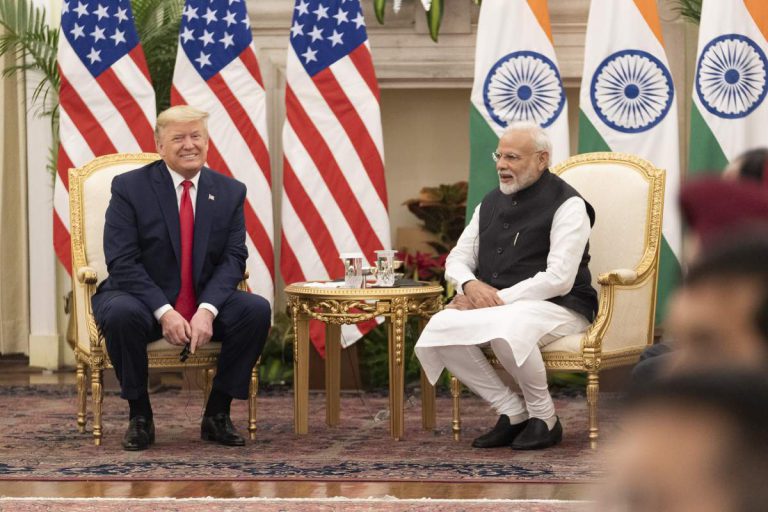
India pursues a policy of ‘de-hyphenation’ in the Middle East. This has been exemplified by Narendra Modi forging cordial relations with Israeli Prime Minister Benjamin Netanyahu and also being the first Indian Prime Minister to visit Palestine in 2018. India has thus welcomed the normalisation efforts with a carefully crafted response, which doesn’t abandon India’s traditional support to the Palestinian cause and reiterates the need for a ‘two-state solution’. The strategic value that India attaches to both UAE and Israel is immense. The former is a supplier of crude oil and home to a significant number of Indian expatriates (around 3.3 million) that constitute one of the largest foreign remittances that India receives. The latter is India’s major defence partner, supplier of critical military technologies, and cooperates in a myriad of other fields like agriculture, space technology, cybersecurity, etc.
Saudi Arabia’s, silent consent to the deal is implied since no GCC country (except Qatar) acts without its approval. It is, however, not expected to tread a similar path anytime soon. Coming out openly in Israel’s support may be counterproductive for the Saudi royal family which fears backlash from the hard-line Wahhabi conservatives.
American politics too will be affected big time. Though Joe Biden, Democratic Party’s presidential nominee for 2020 elections, has applauded the move, the incumbent US President Donald J. Trump has most to gain electorally from these developments. Along with the efforts at rapprochement with North Korea and inking of the US-Taliban peace deal earlier this year, the accord is projected among the major foreign policy achievements of the Trump administration. However, the accord carries the risk of faltering like other reconciliatory efforts, since the Taliban continues to engage in violence with the Afghan security forces and Kim-Jong Un keeps on developing his nation’s nuclear weapons and ballistic missile capabilities.
The Confused State
Pakistan’s position on the deal is unclear. It can’t overtly condemn it, fearing its Saudi overlords. But it can’t support it either, as that would weaken its long term prospects on Kashmir. Moreover, the diplomatic fiasco with Saudi Arabia over the Organisation of Islamic Conference (OIC) and Kashmir issue is a more pressing concern for Pakistan. The deadlock, nevertheless, shouldn’t be viewed by India as a major foreign policy shift in its neighbourhood, where the military establishment has the final say and whose financial interests dictate maintaining sound relations with the Saudis.
Conclusion
The Middle East peace process is slowly but steadily solidifying the new geopolitical fault lines. It has opened the doors of cooperation between Iran and Turkey. It will bring India closer to Gulf Arab states. It has moulded Turkey, Pakistan, Malaysia & Qatar into a strange, loosely held alliance. This alliance calls to mind the failed Cold War-era CENTO (Baghdad Pact) which aimed to contain the Soviet Union’s communist expansion in the Middle East. This time, however, the Middle East is divided from within. It will be interesting to witness how the new alliances unfold.
References
- White House’s Statements & Releases. (2020, September 15). Abraham Accords Peace Agreement. Retrieved October 1, 2020, from https://www.whitehouse.gov/briefings-statements/abraham-accords-peace-agreement-treaty-of-peace-diplomatic-relations-and-full-normalization-between-the-united-arab-emirates-and-the-state-of-israel/
- Crowley, M. (2020, September 15). Israel, U.A.E. and Bahrain Sign Accords, With an Eager Trump Playing Host. Retrieved October 1, 2020, from https://www.nytimes.com/2020/09/15/us/politics/trump-israel-peace-emirates-bahrain.html
- Aljazeera’s Interacrtives. (n.d.). A century on: Why Arabs resent Sykes-Picot. Retrieved October 1, 2020, from https://interactive.aljazeera.com/aje/2016/sykes-picot-100-years-middle-east-map/index.html
- Council on Foreign Relations’ Global Conflict Tracker. (n.d.). Israeli – Palestinian Conflict. Retrieved October 1, 2020, from https://www.cfr.org/global-conflict-tracker/conflict/israeli-palestinian-conflict
- Zafar, M.A. (2020, September 11). Abraham accord: A Stab for Palestine or a grab for UAE and Israel. Retrieved October 1, 2020, from https://moderndiplomacy.eu/2020/09/11/abraham-accord-a-stab-for-palestine-or-a-grab-for-uae-and-israel/
- Aljazeera News. (2020, August 14). Iran: UAE-Israel deal a ‘stab in the back’ to Muslims. Retrieved October 1, 2020, from https://www.aljazeera.com/news/2020/08/14/iran-uae-israel-deal-a-stab-in-the-back-to-muslims/
- Guerin, O. (2020, July 10). Hagia Sophia: Turkey turns iconic Istanbul museum into mosque. Retrieved October 1, 2020, from https://www.bbc.com/news/world-europe-53366307
- Aljazeera News. (2020, September 15). Qatar rules out normalising relations with Israel. Retrieved October 1, 2020, from https://www.aljazeera.com/news/2020/09/15/qatar-rules-out-normalising-relations-with-israel/
- Keinon, H. (2018, January 18). What is India’s de-hyphenation policy toward Israel and why does it matter? Retrieved October 1, 2020, from https://www.jpost.com/israel-news/india-israel/what-is-indias-de-hyphenation-policy-toward-israel-and-why-does-it-matter-538170
- Ministry of External Affairs’ (Govt. of India) Media Centre. (2020, August 14). Statement by the Official Spokesperson on the full normalisation of relations between UAE and Israel. Retrieved October 1, 2020, from https://www.mea.gov.in/media-briefings.htm?dtl/32892/Statement_by_the_Official_Spokesperson_on_the_full_normalisation_of_relations_between_UAE_and_Israel_during_the_virtual_weekly_media_briefing_on_14_Au
- Ministry of External Affairs’ (Govt. of India) Briefs on Foreign Relations. (n.d.). India – UAE Bilateral Relations. Retrieved October 1, 2020, from https://www.mea.gov.in/Portal/ForeignRelation/Bilateral_Brief_feb_2020_.pdf
- Ministry of External Affairs’ (Govt. of India) Briefs on Foreign Relations. (n.d.). India – Israel Bilateral Relations. Retrieved October 1, 2020, from https://www.mea.gov.in/Portal/ForeignRelation/India-Israel_relations.pdf
- Gritten, W. (2020, March 5). Is the US-Taliban peace deal already collapsing? Retrieved October 1, 2020, from https://www.theweek.co.uk/106021/is-the-us-taliban-peace-deal-already-collapsing
- Missile Defense Project, “Missiles of North Korea,” Missile Threat, Center for Strategic and International Studies, June 14, 2018, last modified July 16, 2020, https://missilethreat.csis.org/country/dprk/.
- Inayat, N. (2020, August 20). Pakistan’s enemy number one is Israel now. India can wait. Retrieved October 1, 2020, https://theprint.in/opinion/letter-from-pakistan/pakistan-enemy-number-one-is-israel-now-india-can-wait/485729/
- Ramachandran, S. (2020, August 13). Is Pakistan Losing Saudi Arabia? Retrieved October 1, 2020, https://thediplomat.com/2020/08/is-pakistan-losing-saudi-arabia/
- Abedin, M. (2020, September 16). Israel-UAE deal: Iran and Turkey must form a united front. Retrieved October 1, 2020, https://www.middleeasteye.net/opinion/israel-uae-deal-iran-turkey-united-front
- Spyer, J. (2020, May 27). Turkey, Pakistan, Malaysia and Qatar form troubling new alliance. Retrieved October 1, 2020, https://www.jpost.com/middle-east/turkey-pakistan-malaysia-and-qatar-form-troubling-new-alliance-629519



 Login
Login
Excellent article. Neutral in approach and based on evidence.