
Caste Census and OBC backwardness: The Tamil Nadu Model

Amritha is a public policy professional. She loves working at the intersection of data and policy.
On the 30th of April 2025, the Cabinet Committee on political affairs, chaired by the PM Narendra Modi, gave a green signal to enumerate caste in the upcoming Census of 2027. It is scheduled to be conducted in two phases- from the 1st of October 2026 for snow-bound non-synchronous states and UT, and from the 1st of March 2027 for the rest of the country. The upcoming census will be the first ever caste census since independence.
Seventy years since the publication of the last Caste Census in 1931, proposals for conducting a caste-based enumeration once again gained prominence during the 2001 Census. The Socio-Economic and Caste Census (SECC) of 2011 attempted to enumerate caste but was dismissed, citing the anomalies in the caste data collected, and was never published (Chatterji, 2024). Though perceived as a threat by the meritorious general category, the Caste Census is an instrument that has the potential to bring a major structural change to the backward class politics.
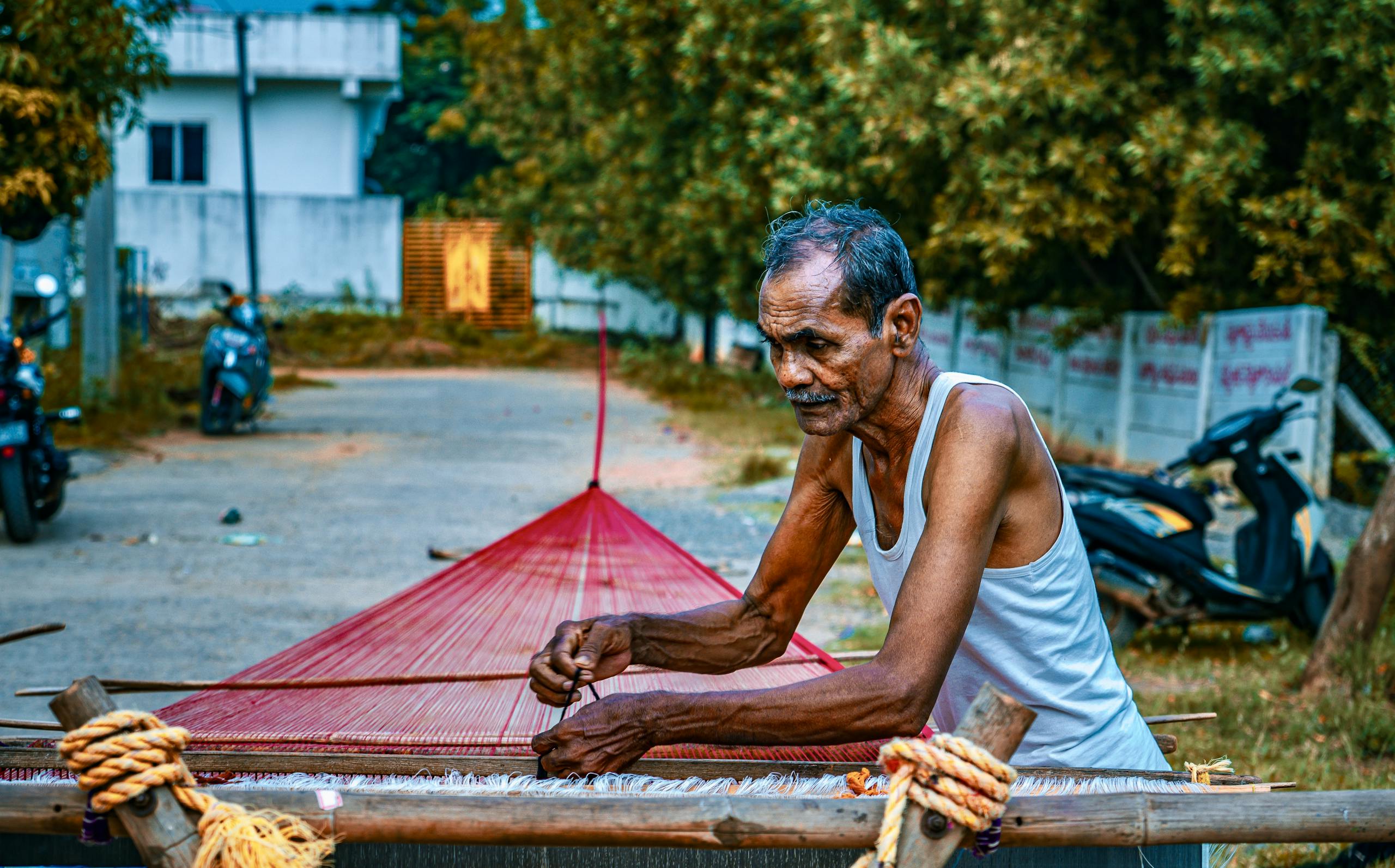
Within the socially backward classes, the grossly misrepresented OBCs make up 52% of the total population of India (Census, 2011). Unlike the Scheduled Castes and Scheduled Tribes, OBCs were not enshrined with constitutional remedies, except for reservation, following the implementation of the Mandal Commission’s recommendations in 1992. The OBCs are a conglomerate of socially and educationally backward communities. This includes vocational castes, nomadic and semi-nomadic tribes, denotified tribes (Vimukta Jatis), religious minorities and other castes, identified based on the recommendations of the local government. Despite their relative backwardness in terms of social, economic, political and cultural capital, they are often treated as an extended class of general category communities until 1992. Within the existing reservation quota, they are grossly underrepresented and undercounted. The General category, the powerful, numerically low social class, often uses the sheer count of OBCs as a shield to defend their anti-reservation stance.
Following table gives a snapshot of how quota support for OBCs is lower than the quota available for the General category, though their social disadvantages are higher.
| Table 1: Representation of Caste Communities within the existing Quota System | |||
|---|---|---|---|
| Caste Category | Reservation Quota (%) | Share in total Population as per 2011 Census (%) | Ratio of Quota to Population Coverage (%) |
| ST | 7.5 | 8.6% | 87.20 |
| SC | 15 | 16.6% | 90.36 |
| OBC (without Creamy Layer) | 27 | 47% (52* – 5.0**) | 57.44 |
| General (EWS)(without Creamy Layer) | 10 | 15.3% (22.8 – 7.5***) | 65.35 |
*Mandal Commission figures
**Assuming 5% Creamy Layer among OBCs
***Assuming 7.5% Creamy Layer among the General category
Source: Author’s own calculation based on data from the Census 2011 and the Mandal Commission Report 1983.
A Brief History
Counting the Caste has been a pertinent issue of contempt in the Indian subcontinent even before the formation of independent India. In the Madras presidency, leaders like Iyothee Dass Pandithar urged the Dalits to be registered as “Casteless Dravidians” instead of Hindus. Whereas Leaders like M.K. Gandhi, who saw himself as a Hindu reformist, vehemently opposed this and wanted them to include as “untouchables” within the larger political category of “Hindu” (Vithayathil, 2025). Since independence, the practice of enumerating Caste has been removed from all census operations. Vithayathil (2025) points out that prominent Congress leaders of that time, including the former Prime Minister Nehru and Deputy Prime Minister Patel, dismissed the role of caste and saw it as a disruptor of internal diversity, hindering the homogenisation of the national identity.
Seventy years after the publication of the first Caste Census, proposals for conducting a caste-based enumeration once again gained the limelight during the 2001 Census. However, the Ministry of Home Affairs, headed by L.K. Advani, dropped the decision to enumerate caste during the 2001 census. Registrar General & Census Commissioner, J.K. Banita, defended the government’s decision, citing that the existing census is overloaded with five million tables (Krishnakumar, 2000). In May 2010, then Prime Minister Dr. Manmohan Singh assured the Lok Sabha that the matter of caste census would be considered in the Cabinet after a period of prolonged conflict from the political alliances (Caste Census, 2010). A Group of Ministers (GoM) was formed and was headed by Finance Minister Pranab Mukherjee, who recommended conducting a caste census (Gupta, 2010). Instead, the then government included caste in another ongoing survey (SECC), designed to identify households living below the poverty line. Both United Progressive Alliances (UPA) and Bharatiya Janata Party (BJP) governments have collectively spent Rs. 5000 crores for the exercise carried out between 2011 to 2015, just for it to never be released, citing the flaws in the dataset. (Mandal, 2023)
Deshpande (2013) observes that Independent India’s legal obligation towards abolishing caste has pushed it to pursue contradicting policies of social justice and caste-blindness. This, in turn, ultimately made the disprivileged lower caste carry the burden of caste, while the Upper caste freely monopolised the caste privileges while posing as casteless citizens. India’s failed attempts from the past to enumerate caste highlights how state institutions have collaboratively worked to evade the documentation of caste privilege while framing caste as a problem of the oppressed and hiding caste privilege and power. Vithayathil (2025) defines this as bureaucratic deflection, a process whereby political leaders and bureaucrats stall policy changes. Despite implementing progressive laws and populist programmes to address the issue, it is the sheer resistance from the bureaucratic structure that is hindering any attempt at equalising social injustice. In the 2022, responding to a question by Ram Nath Thakur of the Janta Dal (U), Minister of State Jitendra Singh said in a written reply that out of 322 officers currently holding the posts of Joint Secretaries and Secretaries in various ministries, only 21.1% are from the backward classes (consolidation of Scheduled communities and other backward communities), the largest social group, whereas, 78% of the positions occupied by the general category made up the upper castes and other elites communities (Refer to Table 2). The lack of reservations at the secretarial-level posts filled by senior IAS officers reveals a paucity of representation and the reality of reservations at work for the backward classes.

| Table 2: Secretaries/Joint Secretaries in Ministries | ||
| Category | Posted officers | Per Cent out of Total Officers |
| General | 254 | 78.88% |
| OBC | 39 | 12.11% |
| SC | 16 | 4.96% |
| ST | 13 | 4.03% |
Source: Rajya Sabha, Unstarred Question No. 1078, ANSWERED ON 15.12.2022.
Similarly, for the upcoming academic year of 2025-26, according to a report by Hindustan Times (2025), only 40 of the 106 selected candidates received a scholarship for the National Overseas Scholarship (NOS), a programme rolled out to support students from non-creamy-layered backward classes to pursue PhD and reputedly known bureaucratically stalled one in recent years. Despite being earmarked Rs. 130 crores for the programme, during FY 2025-26, scholarships of 66 selected candidates have been withheld awaiting clearance from the Cabinet Committee on Economic Affairs to approve the money allocated to these scholarship schemes (Scroll, 2025).
The Caste Census
The Term Other Backward Classes (OBCs) is not enshrined in the constitution, unlike SC and ST, whose preferential treatment is authorised by the constitution of India (Galanter, 1978). Dr. B.R Ambedkar defined it as a community that was backward in the eyes of the local government and had suggested reservation for those classes identified by each state (Pillai, 2007). Since each state employed different approaches to identify backward classes, the categorical criteria of the OBC community fluctuate from region to region. Unlike SCs and STs, the population of OBCs is unknown, relying on data given in the last caste census conducted in 1931, which estimated their population to be 52%. However, sociologists argue that their population could be much higher as demographic composition is subject to change due to internal migration. The unpublished SECC-2011, in Maharashtra alone, has identified 4,28,677 castes while the state population was 10.3 crore, and 1.17 crore were not linked with any caste (Sampath, 2021). Bihar’s caste survey 2023 reveals the state’s OBC population to be 63% against the Mandal Commission’s number of 52% (Bhelari, 2023).
The first Backward Classes Commission (1955), headed by Kalelkar, identified 2,399 backward castes based on their low position in the caste hierarchy, treated all women as backward, and recommended 70% reservation in all technical and professional institutions for backward class students (Ramaiah, 1992). The second Backward Class Commission (1980), headed by B.P. Mandal, also referred to the 1931 census number and recommended the ceiling for OBCs at 27% quota so that the overall reservations would be in reasonable limits, with states exceeding the fixed quota remaining unaffected (Second Backward Classes Commission, 1980). In the 1990s, the reservation system, which is a social affirmative action extended to historically marginalised communities in the Scheduled list of the constitution, accommodated the Other Backward Classes (OBCs) on the basis of the Mandal Commission recommendations. In 1992, a Supreme Court ruling –Indra Sawhney & Others v. Union of India, capped the overall reservation quota ceiling at 50% and excluded economic conditions as a criterion (Supreme Court of India, 2004). As a result, the OBC reservation in all states was limited to 27% of the quota, except for the state of Tamil Nadu, which was allowed to exceed the reservation cap up to 50% under the Ninth Schedule of the Constitution (Chandrachaud, 2023).
Post Mandal Commission, Backward classes were not overlooked as a singular vote bank. Within backward classes, a power tussle emerged between the land-owning dominant OBCs and non-dominant OBCs who are landless labourers, skilled artisans, nomadic tribes, and oppressed Muslims – collectively known as the Atipichchhdi Jati (Kashyap, 2024). The non-dominant OBCs are subdivided into thousands of castes and are politically invisible. In 1996, the Hukum Singh Committee’s recommendations observed that politically well-represented Yadavs and Kurmis among OBCs and Chamars/Jatavs have occupied the majority of the jobs (Verma, 2001). This led to the demand for the sub-categorisation of reservation, often referred to as “quota within quota”.
The Sub-categorisation has been a pertinent demand among the historically depressed and backward classes due to the disproportionate distribution of these benefits among various communities. States like Gujarat, Kerala, and Tamil Nadu have set up commissions to sub-categorise the OBC quota as early as 1972. As of 2015, only 11 Indian states and UTs have sub-categorised the OBC quota, but there is no nationwide sub-categorisation of the quotas (National Commission for Backward Classes, 2015). To address the backwardness within the OBCs, the National Commission for Backward Classes proposed the Sub-categorisation of the OBCs. In October of 2017, the Commission to examine Sub-categorisation of Other Backward Classes, headed by Justice (Retd.) G. Rohini was constituted under Article 340. In 2018, the commission found that 97% of the reserved jobs and seats had gone to 25% of OBC sub-castes, whereas 37% of OBC sub-castes had zero representation (Mukherjee, 2023). The Rohini commission report was never published officially, and priority was deflected once again by the bureaucratic structure. A year later, the Modi government enacted the 103rd Constitutional Amendment (2019), introducing a 10% reservation for economically weaker sections (EWS) among the general category, breaching the 50% rule laid down since the Indra Swaney case (Chandrachaud, 2023). Reservation, a policy with the primary purpose of de-segregating the elite and democratising the base of decision-makers, reflective of the broader social composition, gets defeated by providing a 10% quota to the already well-represented elite (Deshpande & Ramachandran, 2019).
A Tamil Nadu case study

Tamil Nadu has an intricate political history with the struggle of the Backward Classes as the expression of ‘backward classes’ itself first appeared in the former Madras presidency due the Periyar’s Self Respect movement (Jaffrelot, 2025). Rudolph and Rudolph (1984) explain that the non-brahmin movement started in the south first, as the Brahmins were very conspicuous, as the sole Savarna class (Aryan twice-born class), unlike in the north, where they had to compete with other elite castes such as Kshatriyas, Vaisyas, and Kayasthas. The non-Brahmin land-owning aristocrats of Madras feared that the Brahminical Congress leadership would stifle the progress of ordinary people after eliminating the British, thus adopting hostility towards the Nationalist movement (Sattanathan, 2007). In 1913, Andrew Cadrew, a member of the Madras Executive Council, presented statistical evidence on the relative position occupied by Brahmins to underrepresent non-Brahmin masses in the Madras province, before the Public Service Commission (Irschick, 1969). To oppose traditional and modern Brahmin domination, the non-Brahmin elites formed the anti-Brahmin, anti-nationalist Justice party (Rudolph and Rudolph, 1984). In 1916, the South Indian Liberal Federation (or the Justice Party) issued the Non-Brahmin Manifesto, which presented functional statistical data taken from Alexander Cardew to present the excessive presence of Brahmins in administrative posts (Pandian, 2007). When in power, the Justice Party government headed by the Raja of Panaga, introduced the system of communal reservation through two government Orders (GOs), and continued until 1951 in this region plagued by the non-Brahmin movement (Galanter, 1978). Both these GOs, based on statistics, ensured reservations in government employment for non-Brahmins (Pandian, 2007).
Post-independence, while other states were attempting to establish reservation policies, the state set up two backward commissions to study the backwardness of the other backward classes. The First Backward Commission (1970), headed by A.N. Sattanathan, enhanced the reservation quota for OBCs, whereas the Second Backward Commission, headed by J.A. Ambasankar, led to compartmental reservation within OBCs (Radhakrishnan, 1989). Tamil Nadu became the first state to implement 69% in the 1990s (Dharmadhikari, 2021). Now, in Tamil Nadu, 89% of the State’s population is eligible for the 69% reservation provided in education and public employment (Imranullah, 2024). Compared to the plight of OBCs in the country, in Tamil Nadu, the situation for the OBCs has been better, to which Dravidian parties can take considerable credit. In the Rajya Sabha Session, BJP President JP Nadda has claimed that 27% of their MLAs across the country are from OBC communities (Kumar Anshuman, 2023). Whereas in Tamil Nadu, OBC MLAs make up to 76% proportionate to their share of the population in the state (Verniers et al., 2021).
Drèze and Sen (2013) point out that Tamil Nadu’s official poverty estimates were higher than the all-India figures throughout the 1970s and 1980s. During the 1970s and 80s, the state initiated bold social programmes accessible to all on a non-discriminatory basis, as an outcome of democratic politics (Drèze and Sen, 2013). The Decadal average per Capita (Refer to Table 3) of Tamil Nadu indicates that, from the 1960s to 2010s, it has grown by 460%, much more than that of West Bengal, which has witnessed a similar growth trajectory until the 1990s (Kalaiyarasan & Vijayabaskar, 2021). In multidimensional poverty (Refer to Table 4), the state has reported 2.20% of the Multidimensionally poor population compared to Gujarat, which had witnessed a similar trend in Decadal Average per capita, but reported 11.66% as the multidimensionally poor population. Varshney (2013) notes that the anti-caste mobilisation in Tamil Nadu has witnessed better provisions of social services to the masses.
| Table 3: Decadal Average Per Capita (Rs.) (at Base 2004-05) | ||||||
| States | 1960s | 1970s | 1980s | 1990s | 2000s | 2010s |
| Tamil Nadu | 10,314 | 11,474 | 12,855 | 20,623 | 34,050 | 57,831 |
| Maharashtra | 11,236 | 13,192 | 16,142 | 25,704 | 40,228 | 63,764 |
| Gujarat | 10,105 | 11,272 | 14,565 | 22,031 | 34,810 | 58,193 |
| West Bengal | 9,151 | 9,229 | 10,588 | 14,852 | 23,784 | 33,487 |
| Bihar | 5,091 | 5,400 | 6,391 | 6,571 | 8,386 | 13,775 |
| All India | 9,005 | 9,951 | 11,754 | 16,172 | 25,355 | 37,333 |
Source: Kalaiyarasan, A., & Vijayabaskar, M. (2021). The Dravidian model: Interpreting the political economy of Tamil Nadu. Cambridge University Press. (Original data from Reserve Bank of India, Handbook of Statistics on Indian States).
| Table 4: State-wise Percentage of Population who are multidimensionally poor (Headcount Ratio) | ||
|---|---|---|
| States | NFHS-5 (2019-21) | NFHS-4 (2015-16) |
| Tamil Nadu | 2.20% | 4.76% |
| Karnataka | 7.58% | 12.77% |
| Maharashtra | 7.81% | 14.80% |
| Gujarat | 11.66% | 18.47% |
| West Bengal | 11.89% | 21.29% |
| Bihar | 33.76% | 51.89% |
| All India | 14.96% | 24.85% |
Source: National Multidimensional Poverty Index: Progress Review (2023), NITI Aayog.
Caste Census as the future

For the past 95 years, despite the backlash from the elites, the caste census of 1931 has been the sole document that presents social facts on the depravity and backwardness of the communities in the subcontinent. The census data has been the reason for many backward communities who do not fall under the scheduled list to organise politically and demand social affirmative remedies such as caste-based reservations. While the BJP’s current stand on caste enumeration is shaped by factors like the Bihar polls, Women’s Reservation Bill, delimitation exercise, and the push to synchronise the Lok Sabha and Assembly elections, its political urgency cannot be ignored. Jaffrelot (2025) highlights that the caste census, as a statistical instrument, is bound to make a structural impact on Indian society by measuring the under or over-representation of different caste groups in the bureaucracy, the public sector undertakings, etc.
Drawing the example of a failed attempt from the SECC 2011, Shetty (2024) underscored that the Census Act of 1948 should be amended to enumerate caste rather than letting the Union executives enumerate according to their political convenience. Although the officials clarified that the government does not need to amend the census act to enumerate caste since it is empowered under section 8 of the existing law (Press Trust of India, 2025). Despite this, the fundamental concern lies in whether this practice of counting caste will be a regular practice from the upcoming census or a one-time political response. Chopra (2025) points out a politically sensitive complication of whether the central list maintained by the National Commission for Backward Classes (NCBC) or the state list of OBCs will be enumerated. Another equally critical concern is whether the upper caste communities will also be enumerated instead of being them with creamy layered communities under the General Category. Without addressing these political and operational uncertainties, the Caste Census will remain a contested process lacking the political will to uplift the backward classes.
References
- Bharti, N. K., Chancel, L., Piketty, T., & Somanchi, A. (2024, March 18). Income and wealth inequality in India, 1922–2023: The rise of the billionaire Raj (World Inequality Lab Working Paper No. 2024/09). World Inequality Lab. https://wid.world/www-site/uploads/2024/03/WorldInequalityLab_WP2024_09_Income-and-Wealth-Inequality-in-India-1922-2023_Final.pdf
- Bhelari, A. (2023, November 7). Bihar caste-based survey report: Poverty is highest among Scheduled Castes, lowest among Kayasths. The Hindu. https://www.thehindu.com/news/national/bihars-caste-based-survey-report-shows-yadavs-hold-most-govt-jobs-among-obcs/article67509087.ece
- Caste Census: The Road Ahead. (2010). Economic and Political Weekly, 45(34), 7–8. http://www.jstor.org/stable/25741985
- Chatterji, S. (2024, August 30). HT Explainer: Why the 2011 caste data was not made public. Hindustan Times. https://www.hindustantimes.com/india-news/ht-explainer-why-2011-caste-data-was-not-made-public-101724995302387.html
- Chopra, R. (2025, May 2). Caste census: Legal basis, timeline, and challenges ahead. The New Indian Express. https://indianexpress.com/article/explained/caste-census-legal-basis-timeline-and-challenges-9976968
- Deshpande, A., & Ramachandran, R. (2019, March 30). The 10% quota: Is caste still an indicator of backwardness?Economic and Political Weekly, 54(13). https://www.epw.in/journal/2019/13/perspectives/10-quota.html
- Deshpande, S. (2013). Caste and castelessness: Towards a biography of the “general category.” Economic and Political Weekly, 48(15), 32–39. http://www.jstor.org/stable/23527121
- Dharmadhikari, S. (2021, March 29). Tamil Nadu’s reservation stands at 69% despite a 50% quota cap. The News Minute. https://www.thenewsminute.com/tamil-nadu/how-tamil-nadu-s-reservation-stands-69-despite-50-quota-cap-146116
- Drèze, J., & Sen, A. (2013). An uncertain glory: India and its contradictions. Princeton University Press.
- Galanter, M. (1978). Who are the Other Backward Classes?An introduction to a constitutional puzzle. Economic and Political Weekly, 13(43/44), 1812–1828. http://www.jstor.org/stable/4367065
- Gupta, S. (2010, August 11). GoM approval for caste-based census. The Hindu. https://www.thehindu.com/news/national/GoM-approval-for-caste-based-census/article16128043.ece
- Hindustan Times. (2025, July 7). Ministry cites ‘inadequate funds’, withholds overseas scholarships. Hindustan Times. Retrieved July 10, 2025, from https://www.hindustantimes.com/india-news/ministry-cites-inadequate-funds-withholds-overseas-scholarships-101751827357902.html
- Imranullah, S. M. (2024, April 3). 89% of Tamil Nadu’s population are already eligible for reservation, State govt tells Madras High Court. The Hindu. https://www.thehindu.com/news/national/tamil-nadu/89-of-tamil-nadus-population-already-eligible-for-reservation-state-govt-tells-madras-high-court/article68024416.ece
- Irschick, E. F. (1969). Politics and social conflict in South India: The non-Brahman movement and Tamil separatism, 1916–1929. University of California Press.
- Jaffrelot, C. (2025, June 12). Why does Narendra Modi suddenly want a caste census? The Wire. https://thewire.in/caste/why-does-narendra-modi-suddenly-want-a-caste-census
- Kashyap, S. (2024, March 1). Why the EBCs are the key to the 2024 election. The Caravan. https://caravanmagazine.in/politics/ebc-obc-2024-key-election-bjp
- Krishnakumar, A. (2000, September 2–15). Caste and the census. Frontline, 17(18). https://frontline.thehindu.com/the-nation/article30159558.ece
- Kumar, A. (2023, September 22). BJP lists its OBC ministers, MPs, MLAs. The Economic Times. https://m.economictimes.com/news/politics-and-nation/bjp-lists-its-obc-ministers-mps-mlas/articleshow/103846347.cms
- Lawal, S. (2024, April 27). South Africa: 30 years after apartheid, what has changed? Al Jazeera. https://www.aljazeera.com/news/2024/4/27/south-africa-30-years-after-apartheid-what-has-changed
- Mandal, D. (2023, April 21). Hindutva’s most formidable opponent — caste census: Why didn’t Congress govts push for it? ThePrint. https://theprint.in/opinion/hindutvas-most-formidable-opponent-caste-census-why-didnt-congress-govts-push-for-it/1531461/
- Mukherjee, V. (2023, October 26). Rohini Commission decoded: Understanding sub-categorisation of OBCs. Business Standard. https://www.business-standard.com/india-news/rohini-commission-decoded-understanding-sub-categorisation-of-obcs-123102600760_1.html
- National Commission for Backward Classes. (2015, March 2). Report on subcategorization within Other Backward Classes [PDF]. Government of India, Ministry of Social Justice & Empowerment. https://www.ncbc.nic.in/Writereaddata/Report%20on%20Sub-Categorization%20within%20OBCs%20-2015-%20Pandey635681469081640773.pdf
- NITI Aayog. (2023). National Multidimensional Poverty Index: A progress review 2023. Government of India.https://niti.gov.in/sites/default/files/2023-07/National-Multidimensional-Poverty-Index-2023.pdf
- Pandian, M. S. S. (2007). Brahmin and nonBrahmin: Genealogies of the Tamil political present. Permanent Black.
- Pillai, N. (2007). Who are the Other Backward Classes. National Law School of India Review, 19(1), Article 4. https://repository.nls.ac.in/cgi/viewcontent.cgi?article=1040&context=nlsir
- Press Trust of India. (2025, May 11). Caste enumeration in census exercise: No need to tweak law, say officials. PTI News. https://www.ptinews.com/story/national/caste-enumeration-in-census-exercise-no-need-to-tweak-law-say-officials/2546350
- Radhakrishnan, P. (1989). Ambasankar Commission and Backward Classes. Economic and Political Weekly, 24(23), 1265–1268. http://www.jstor.org/stable/4394921
- Ramaiah, A. (1992). Identifying Other Backward Classes. Economic and Political Weekly, 27(23), 1203–1207. http://www.jstor.org/stable/4398478
- Rudolph, L. I., & Hoeber Rudolph, S. (1984). The modernity of tradition: Political development in India(New ed.). University of Chicago Press.
- Sampath, G. (2021, October 3). Explained | Why is the government against caste census? The Hindu. https://www.thehindu.com/news/national/explained-why-is-the-government-against-caste-census/article36724397.ece
- Scroll Staff. (2025, July 7). Centre withholds overseas scholarship for 66 candidates, says clearance subject to fund availability. Scroll.in. https://scroll.in/latest/1084278/centre-withholds-overseas-scholarship-for-66-candidates-says-clearance-subject-to-fund-availability
- Second Backward Classes Commission (Chairman: B. P. Mandal). (1980, December 31). Report of the Backward Classes Commission, Part I, Volumes I–II [PDF]. National Commission for Backward Classes. https://www.ncbc.nic.in/Writereaddata/Mandal%20Commission%20Report%20of%20the%201st%20Part%20English635228715105764974.pdf
- Shetty, K. A. V. (2024, July 10). The case for a caste Census. The Hindu. Retrieved from https://www.thehindu.com/news/national/the-case-for-a-caste-census/article68390396.ece
- Singh, J. (2022, December 15). Rajya Sabha Unstarred Question No. 1078. Ministry of Personnel, Public Grievances and Pensions (Department of Personnel & Training), Government of India.
- Soundararajan, T. (2022). The trauma of caste: A Dalit feminist meditation on survivorship, healing, and abolition. North Atlantic Books.
- Supreme Court of India. (2004). Communal reservation system in the former British Presidency state. https://main.sci.gov.in/jonew/judis/16589.pdf
- Varshney, A. (2012). Two banks of the same river? Social order and entrepreneurialism in India. In P. Chatterjee & I. Katznelson (Eds.), Anxieties of democracy: Tocquevillian reflections on India and the United States (pp. [insert page range]). Oxford University Press.
- Verma, A. K. (2001). UP: BJP’s caste card. Economic and Political Weekly, 36(48), 4452–4455. http://www.jstor.org/stable/4411406
- Verniers, G., Karthik, V. K. R., Kumar, M., & Agrawal, N. (2021, May 10). Tamil Nadu’s new Assembly in 33 charts: Lowest women representation in 25 years, OBCs dominate. Scroll.in. https://scroll.in/article/994446/tamil-nadus-new-assembly-in-33-charts-lowest-women-representation-in-25-years-obcs-dominate
- Vithayathil, T. (2025). Counting caste: Census politics, bureaucratic deflection, and Brahmanical power in India. Cambridge University Press. https://doi.org/10.1017/9781009414135

 Login
Login