

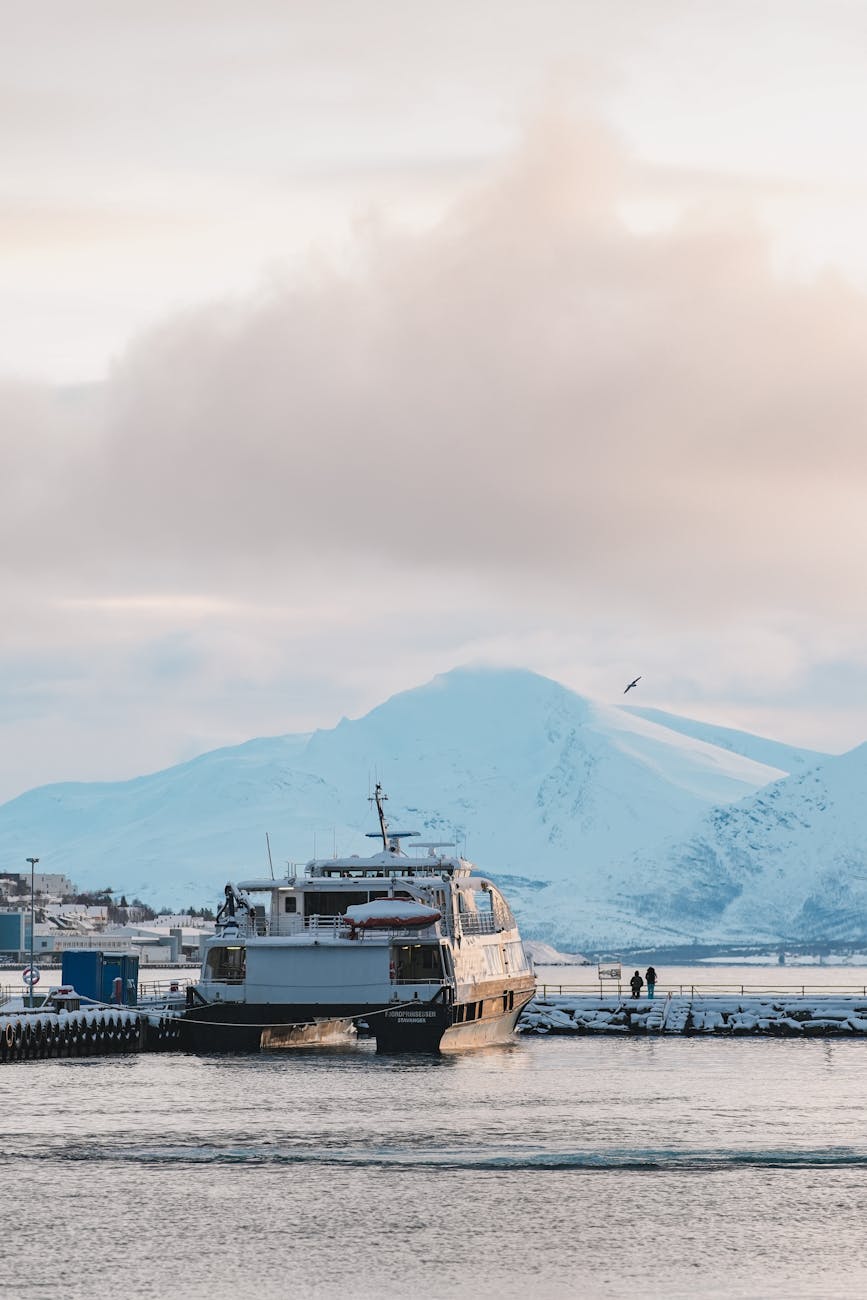
Great power rush in melting Arctic: Where does India stand?

Nuresh is a researcher with a strong interest in geopolitics and political affairs, currently studying at Ramjas College, University of Delhi.
Once a frozen frontier, the Arctic is now turning into a new arena of geopolitical competition, reshaping global trade routes, military strategy and India’s foreign policy calculus.
For much of modern history, the Arctic remained on the margins of the global geopolitical and international level. It was defined as an inhospitable expanse of ice sheets rather than by strategic competition. But today, that global perception is rapidly changing.
The Arctic is warming nearly four times faster than the global average from 1979 to 2021 with a rate of 0.73°C per decade compared to the global average of 0.19°C. Surface temperatures for Oct 2024-Sept 2025 marked the warmest on record since 1900. Rising temperature are accelerating the melting of ice; measurements of summer Arctic sea ice extent each year show a shrinkage of 12.2% per decade due to the warming of temperature.
Rising temperatures and rapid melting of ice is transforming one of the world’s most inaccessible regions into an emerging geopolitical and economic frontier. As the ice retreats previously unreachable maritime routes, vast energy resources and strategic corridors are emerging and becoming increasingly accessible, drawing the attention of global powers.
Russia, the United States of America and China are no longer engaging with the Arctic region through the lens of climate change or scientific cooperation. Instead, they are recalibrating their old policies and strategies to secure influence over energy resources, shipping routes and militarization in the High North.
The Arctic or the High North may appear geographically distant, yet the implications are far from remote and isolated. Talks in Washington about Greenland’s strategic value to US national security, NATO’s expanding footprint in the High North and the deepening of Russia-China collaboration tell the Arctic is fast becoming a contested strategic region.
As a rising power and an expanding global interest, India cannot afford to remain a passive observer and risk strategic irrelevance. New Delhi must decide whether it should merely be an observer in the Arctic competition or it should shape outcomes within it.
Why global powers are rushing to the Arctic
The growing interest in the Arctic is driven by the merging of economic opportunity and strategic importance. One of the key factors is the gradual opening of the shipping routes in the Arctic, particularly the Northern Sea Route (NSR) along the Russian coastline in the north. The Northern Sea Route or Northeast Passage runs through the northernmost parts of the North Sea across the icy waters of the Arctic Ocean north of Russia, east to Chukchi Sea and the Bering Straits. The Northern Sea can reduce the sailing distance by 40% from Asia (Yokohama) to Europe (Rotterdam) which would only take 10 to 14 days compared to the traditional trade routes via Suez Canal which takes a voyage of 22 days or through Cape of Good Hope which takes 29 days. Although the route remains seasonally operational and risky. But its long term strategic value is immense and the value lies in route diversification rather than immediate commercial dominance.
Another driver is resource availability. The Arctic is believed to hold 30% of the world’s undiscovered gas and 13% of the world’s undiscovered oil, along with critical minerals essential for modern industries like copper, phosphorus, niobium, platinum group elements and rare earths. As global energy security becomes increasingly politicized, access to these resources carries both economic and strategic weight.
Beyond economics, the Arctic has acquired growing military significance. What is often missed in mainstream discussion about the Arctic is that it is not merely an emerging substitute for existing geopolitical theatres like the Indo-Pacific, but as a force multiplier for them. Control over these routes and resources will increasingly shape energy and economic security and strategic leverage far beyond the region. The Arctic rush is therefore less about ice melting and simply more about power projection in a rapidly changing world.
Major Power Strategies
Russia – Militarized control and strategic depth
Russia is the most dominant Arctic power by virtue of geography and capability. The Russian Federation being one of the eight Arctic countries and accounting for more than 50% of the Arctic Ocean’s coastline stretching across 24,150 Kilometers, views the region as essential to its economic and strategic future. According to estimates, the Russian Arctic contributes over 6% of national GDP and more than 10% of exports, primarily consisting of energy, metals and mineral resources.
Moscow has heavily invested in Arctic energy projects and is looking to commercialize the region, which it sees as an economic artery and a sovereign controlled region. President Vladimir Putin proposed the introduction of a unified preferential business regime across the entire Far East and Arctic from 2027, which would create a single predictable investment space.
Military strategy is deeply integrated into Moscow’s Arctic vision. On 18 September 2008 Russian President Dmitiry Medvedov officially adopted ‘The foundations of the Russian Federation’s State Policy in the Arctic until 2020 and beyond’. It underlined the importance of security and economic development in the Arctic region. It outlined a plan for development of Arctic forces under the Russian armed forces.
Simultaneously, President Vladimir Putin approved two documents – “Basic Principles of Russian Federation State Policy in the Arctic to 2035” in March 2020 and the “Strategy for Developing the Russian Arctic Zone and Ensuring National Security through 2035” in October 2020. To secure the northern flank, over time, Russia has established military, air and naval bases like Rogachevo Military Base, Zapadnaya Litsa Naval Base, Nagurskoye Airbase providing depth to its deterrence posture.
Since the Ukraine conflict, the Arctic’s importance for Russia has grown further as Russia seeks alternative trade routes and strategic flexibility in the face of Western sanctions.
China – Strategic positing without overt militarization
China’s Arctic strategy is distinct, it reflects a long term, strategically calibrated approach rather than a quest for territorial control. Despite lacking Arctic sovereignty, the PRC defines itself as a “Near Arctic State”, a concept which was reinforced by President Xi Jinping’s 2014 call to transform China into a “Polar Power”. Since 1999, China has invested into scientific diplomacy, carrying out eight scientific expeditions by 2017 and since 2004, has been operating the Yellow River Station in Ny Alesund in the Spitsbergen Archipelago. These platforms enabled China to become an observer to the Arctic Council in 2013.
Beyond science, China has implanted itself economically through multiple strategic energy investments. It holds a 30% stake in Russia’s Yamal LNG project through CNPC and the Silk Road Fund which is valued to be around $12 billion dollars, securing long term natural gas supplies via the Northern Sea Route. This aligns with its “Polar Silk Road” vision, which focuses on shipping diversification and long term access to resources.
Rather than overt militarization, China relies on strategic positioning through investments in Arctic infrastructure through multiple means. Recent developments and strengthening of the Russia-China relations has hardened its position in the High North and has helped it grow its influence in the region, this provides Beijing with dual use operational familiarity and also providing it with an alternative such as Northern Sea Route to chokepoints such as Malacca Strait.
United States – Deterrence, alliances and rule based order
The United States approaches the Arctic primarily through a security, deterrence and governance point of view, Washington views the region as vital to homeland defence and the preservation of rule based order. As Russia’s military posture in the High North hardens and China’s ambitions as a “Near Arctic State” expands, Washington has elevated the Arctic within its strategic planning, which is clearly reflected in its policies like Arctic Strategy 2024 and NOAA’s Arctic Vision and Strategy 2025. The accession of Finland and Sweden into NATO has strengthened the alliance’s Arctic posture by transforming the regional security architecture and joint planning.
The United States increasingly views the region as critical for early warning systems and surveillance, linking Arctic security to broader transatlantic deterrence. In its “Arctic Strategy 2024”, Washington has adopted the “monitor and respond” posture consisting of three lines of efforts – Enhance, Engage and Exercise. This approach is reinforced through US – NATO exercises such as Arctic Edge, Nordic Response and operation NANOOK. President Donald Trump has shown renewed interest in his assertion that Greenland (part of Kingdom of Denmark) is vital for U.S national security and has openly framed that complete control over the island is necessary to counter the growing influence of Russia and China in the Arctic region. These statements have been heavily criticised and opposed by the leaders of Denmark and the European Union.
While Washington lags Russia in the Arctic region, the renewed interests signal that the region is no longer a peripheral theatre but a component of global strategic stability.
India’s Arctic Interests
India’s engagement with the Arctic is often overlooked, yet it has been consistent and deliberate. New Delhi maintains a research station since 2008 in the region, named Himadri meaning ‘the abode of snow’ located at the international Arctic research base in Svalbard, Norway. In 2016, India established its northernmost atmospheric laboratory named Gurvebadet. India also holds observer status in the Arctic Council since 2013, enabling it to actively participate and maintain productive bilateral relations with the other member states of the Arctic Council. These bilateral relations are the main drivers of India’s economic and strategic engagements in the Arctic.
The Arctic region is particularly relevant to India due to its impact on climate and ecosystems including the monsoons in India. India receives around 70% of annual rainfall during this season, Indian agriculture is heavily dependent on these annual rainfalls as it contributes to 20% to the national GDP. Disruptions could lead to direct domestic consequences.
In 2022, India articulated its Arctic Policy, which provided clarity to its long term approach. The policy rested on 6 central pillars – Science and Research, Climate and Environment Protection, Economic and Human Development, Transportation and Connectivity, Governance and International Cooperation, and National Capacity Building. Arctic policy emphasised on science based diplomacy and prioritising research collaboration over militarization, New Delhi positions itself as a responsible stakeholder in an increasingly competitive region.
In late 2025, India’s Arctic engagement took a more concrete turn. During the state visit of Russia’s President Vladimir Putin, New Delhi and Moscow institutionalised regular bilateral consultations on matters related to the Arctic, emphasising on expanding cooperation on the Northern Sea Route and maritime trade relations. External Affairs Minister S Jaishankar has also highlighted India’s expanding role in the Arctic, noting that the country’s long term future is intertwined with the developments in the region.
India’s engagement in the Arctic remains deliberately cautious, it is shaped by a preference for scientific diplomacy and restraint. While this approach may preserve flexibility and may resonate with New Delhi’s emphasis on strategic autonomy, it also raises a critical question, can India really afford prolonged neutrality in a region where norms and rules are increasingly being set by major global powers? As the Arctic Council weakens, India could risk being confined to the margins of decision making unless it articulates clearer political and strategic objectives in the Arctic.
China’s expanding Arctic presence through various initiatives like the “Polar Silk Road” and investments made in the region through collaboration with Moscow has added a competitive dimension to the region that New Delhi cannot ignore. India positions itself as a leader and voice of Global South, it is positioned to push for inclusive Arctic governance, while ensuring Beijing’s influence does not translate to strategic imbalance.
India’s options
The intensifying power struggle in the Arctic for the untapped energy resources, rare earth minerals and a new shipping route carries both risks and opportunities for India. The seabed of the Arctic Ocean has become a subject of overlapping claims by multiple Arctic nations like Canada, Russia and Denmark, leading to militarization and geopolitical friction; these developments could disrupt both global markets and maritime stability, indirectly affecting India’s economic and strategic environment. Also, growing Arctic competition can risk reinforcing bloc based alignments among major powers and the strategic spillover could have effects in regions like the Indo-Pacific. Convergence of Russia and China is complicating its act of balancing between power blocs, which could potentially constrain India’s strategic autonomy and flexibility across multiple theatres.
India’s comparative strategy lies in deepening its multilateral engagement with the Arctic Council member states and Arctic nations by maintaining cooperation in science driven research, assisting in surveying and mapping of the region, conducting joint explorations for natural resources, critical minerals and renewable energy. This would allow India to remain an informed and credible stakeholder. But India must move beyond viewing the Arctic solely as a scientific domain and begin treating it as an extension to its global interests. But this approach would demand prioritization rather than just cooperations, hence would allow India to influence emerging norms rather than just adapt to them.
Diplomatically, India should leverage multilateral platforms to advocate for an inclusive and rule based order in the Arctic region. It should maintain its commitments to strategic autonomy, meaning seeking engagement and cooperating with all major actors based on the country’s national interests and long term strategic goals, while avoiding alignment within competing power blocs. The evolving dynamics of Arctic region is leading to emergence of new shipping routes and energy resources, this allows India to become a meaningful and emerging partner in the region as the world’s third largest supplier of seafarers catering to almost 10% of the global demand and with a well developed hydrographic capacity, India is well positioned to support navigation safety and mapping of the shipping routes.
At the same time, India should not entirely abandon the security dimensions of the Arctic geopolitics, as an emerging global power, it must remain strategically prepared and ready for long term implications of growing strategic competition in the region. However, this should be done without pursuing militarization or permanent presence in the region, in line with India’s doctrine of restraint. The focus should be on limited exposure to polar operations and participation in joint level exercises with partner Arctic states, helping India develop expertise in extreme environment operations ensuring preparedness as the tensions in the region intensifies.
References
- Rantanen, M., Karpechko, A. Y., Lipponen, A., Nordling, K., Hyvärinen, O., Ruosteenoja, K., … Laaksonen, A. (2022). The Arctic has warmed nearly four times faster than the globe since 1979. Communications Earth & Environment, 3, Article 168. https://www.nature.com/articles/s43247-022-00498-3
- NASA. (2025, September 25). Arctic sea ice minimum extent – Earth indicator. NASA Science. https://science.nasa.gov/earth/explore/earth-indicators/arctic-sea-ice-minimum-extent/
- National Oceanic and Atmospheric Administration. (2025). Arctic report card: Update for 2025. https://arctic.noaa.gov/report-card/report-card-2025/
- Arctic Portal. (n.d.). Northeast Passage / Northern Sea Route (NSR). ArcticPortal.org. https://arcticportal.org/shipping-portlet/shipping-routes/northeast-passage
- Humpert, M. (2011, September 15). The future of the Northern Sea Route — A “Golden Waterway” or a niche trade route. The Arctic Institute – Center for Circumpolar Security Studies. https://www.thearcticinstitute.org/future-northern-sea-route-golden-waterway-niche/
- U.S. Geological Survey. (n.d.). Assessment of undiscovered oil and gas resources of the Arctic. U.S. Department of the Interior. https://pubs.usgs.gov/publication/70035000
- Arctic Council. (n.d.). The Russian Federation. https://arctic-council.org/about/states/russian-federation/
- Russia’s Pivot to Asia. (n.d.). How Russia is unlocking Arctic trade and investment for Asia. https://russiaspivottoasia.com/how-russia-is-unlocking-arctic-trade-and-investment-for-asia/
- Stockholm International Peace Research Institute. (2012). Russia’s military build-up in the Arctic (SIPRI Background Paper). https://www.sipri.org/sites/default/files/files/misc/SIPRIBP1203.pdf
- Klimenko, E. (2020). Russia’s new Arctic policy document signals continuity rather than change. Stockholm International Peace Research Institute. https://www.sipri.org/commentary/essay/2020/russias-new-arctic-policy-document-signals-continuity-rather-change
- American Security Project. (n.d.). Russian Arctic military bases. https://www.americansecurityproject.org/russian-arctic-military-bases/
- Feng, E., & He, Y. (2019). The Ice Silk Road: Is China a near-Arctic state? Institute for Security and Development Policy. https://www.isdp.eu/publication/the-ice-silk-road-is-china-a-near-artic-state/
- State Council Information Office of the People’s Republic of China. (2018). China’s Arctic policy (White Paper). https://english.www.gov.cn/archive/white_paper/2018/01/26/content_281476026660336.htm
- Conley, H. A., & Rohloff, C. (2023). Rising tensions and shifting strategies: Evolving dynamics of U.S. grand strategy in the Arctic. The Arctic Institute. https://www.thearcticinstitute.org/rising-tensions-shifting-strategies-evolving-dynamics-us-grand-strategy-arctic/
- U.S. Department of Defense. (2024). 2024 Department of Defense Arctic strategy. https://media.defense.gov/2024/Jul/22/2003507411/-1/-1/0/DOD-ARCTIC-STRATEGY-2024.PDF
- National Oceanic and Atmospheric Administration. (2025). NOAA Arctic vision and strategy 2025. https://arctic.noaa.gov/wp-content/uploads/2025/01/NOAA_Arctic_Vision_Strategy_2025.pdf
- National Centre for Polar and Ocean Research. (n.d.). Himadri: India’s Arctic research station. https://ncpor.res.in/app/webroot/pages/view/340-himadri-station
- Arctic Council. (n.d.). Republic of India. https://arctic-council.org/about/observers/republic-of-india/
- Ministry of Earth Sciences, Government of India. (2022). India’s Arctic policy: Building a partnership for sustainable development. https://www.moes.gov.in/sites/default/files/2022-05/India_Arctic_Policy_2022.pdf

 Login
Login
This insightful article explores the escalating great power rivalry in the resource-rich, melting Arctic region and assesses India’s emerging strategic role. It balances geopolitical analysis with India’s diplomatic and economic opportunities effectively