
Cultural Invasion of Bengal: Hindutva challenge and the Left’s legacy
Supratim is a Political Science student at St. Xavier’s College (Autonomous), Kolkata. He holds interest in critical theories and post-colonialism.
For a long part of both pre and post independent history of the subcontinent, Bengal stood as an intellectual and cultural exception – a region defined by secularism, pluralism, dissent, and critical thought. From the mid-19th-century Bengal Renaissance spearheaded by Raja Ram Mohan Roy, Ishwar Chandra Vidyasagar, Begum Rokeya, and many more, to the Left Front’s 34 years of rule, the longest democratically elected communist government, (Mukherjee, 2019) and its ideological dominance to the 1970s Naxalbari’s peasant uprising, it cultivated a political culture rooted in rationalism, scientific temper, and humanism. Bengali’s identity – bangaliyana – has traditionally resisted both New Delhi’s dominance and religious orthodoxity – privileging culture over creed and debate over dogma. However, despite never coming into power, the steady rise of the Bharatiya Janata Party (BJP) in Bengal points to a profound ideological rupture. It attempts to overwrite Bengal’s historically cosmopolitan ethos with the homogenizing logic of Hindutva. This shift is not merely electoral but ideological – an effort to disrupt Bengal’s cultural symbols, its intellectual legacies, and collective memory of a pan-Indian Hindu nationalist narrative. In this contest between Bangaliyana and Bharatiyata, the 2026 Assembly Elections aren’t just a political contest, but a struggle over the very soul of Bengal’s identity.
Cultural Invasion
The BJP’s entry into Bengal is not merely a political expedition – it’s a project of cultural conquest, aimed at reshaping the symbolic landscape of a state long resistant to ideals of Hindu nationalism. (ibid.) This “cultural invasion” doesn’t operate through coercion but through appropriation and reinterpretation of Bengal’s historical culture. The BJP and the Hindutva apparatus, thus, seek to rewrite Bengal’s intellectual heritage and identity markers, transforming secular icons into ideologically charged instruments. Figures such as Rabindranath Tagore, Swami Vivekananda, and Netaji Subhas Chandra Bose have undergone a reconfiguration in the new Hindutva experiment of appropriation – with Tagore’s humanistic internationalism turned into cultural nationalism; Vivekananda’s spiritual cosmopolitanism has been reduced to Hindu revivalism; and Netaji’s anti-imperialist struggle recast as armed ultranationalism against the colonial government. (Vardhan & Vardhan, 2023) Such reinterpretations attempt to frame Hindutva as native to Bengal’s historical consciousness, concealing its secular-universalist past.
This invasion also unfolds through the politics of emotion and aesthetics – the selective evaluation of festivals, rituals, legends, and myths as markers of a unique political identity. Religious festivals have been turned into markers of nationalism, where faith has been mobilized as proof of belonging. The BJP’s discourse of “cultural pride”, thus, functions as a subtle colonization of Bengal’s pluralistic imagination, replacing dialectical reasoning with emotional populism.
In essence, BJP’s cultural invasion isn’t just ontological, but philosophical too – replacing Bengal’s long-standing culture of critique and diversity with the homogenizing and assimilating certainties of Hindutva. This isn’t just a struggle for territory, but of meaning, symbols, language, and memory on which the future of Bengal’s political culture will be shaped.
Politics of Semiotics
Bengal politics have always been supplemented with political articulation from its cultural front – the songs of the Indian People’s Theatre Association, Ritwik Ghatak’s radical cinematography like Amar Lenin, Satyajit Ray’s portrayal of the Bengali villages in the Apu Triology, to the poems of resistance and communist internationalist slogans of China er chairman, aamader chairman (“China’s Chairman Is Our Chairman”) during the peasants-students uprising in the aftermath of Naxalbari debacle in 1968 – all have served as weapons of ideological assertion. The Left Front, which ruled the state for 34 years, mastered this politics of symbolism – its red flags, martyrs’ memorial, and mass slogans like “Tomar naam, amar naam – Vietnam, Vietnam” (“Your Name, My Name – Vietnam, Vietnam) during the Vietnam War embedded the aesthetics of revolution into the daily Bengali livelihood. The Left’s discourse fused class struggle with Bengali cultural assertion, nurturing a political culture based upon dialectics, rationalism, and collective consciousness.
The BJP, however, reconfigures this imagery through idioms of religion and emotion. Its usage of the slogan “Jai Shree Ram” represents not merely a devotional chant but a slogan meant to fill the vacuum left by the contemporary decadent Left of Bengal, directly imported from the Hindi heartland, which once Bengal and its socio-political climate fiercely resisted. By introducing a vocabulary alien to Bengal’s secular linguistic rhythm, the BJP aims to redefine what it means to be a “Bengali” and “Hindu”, thereby providing a new definition of “Bengali Hindu”. The Bengali bhadralok imagery, thus, automatically situates itself into a new tension – between a newly emerging homogenized Hindu identity where the “Bengali” identity is subordinated, and an autonomous Bengali where being Hindu is secondary to a broader Bengali cultural pride.
Although the ruling Trinamool Congress’s slogan of Khela Hobe or Trinamool Er Gorjon, Banglar Birodhi der Bisorjon (Trinamool’s Roar, Abandonment of Bengal’s Opposition) is also playing a vital role in counter-mobilizing the BJP’s project, it is far from capturing or rupturing Bengal’s political culture. Trinamool’s lack of a coherent ideological ground and outright emphasis on charismatic populism make it an odd one out. What unites the BJP and the Left is their ideological commitments, however contrasting they may be, which will enable them to have a long-lasting mark on Bengal politics.
In this struggle of symbols and speeches, Bengal’s political language becomes a mirror of its identity crisis – whether it will continue to foster the dialectics of dissent, or in the uniform Hindutva script of regional reimagination.
Erasure of Syncretism
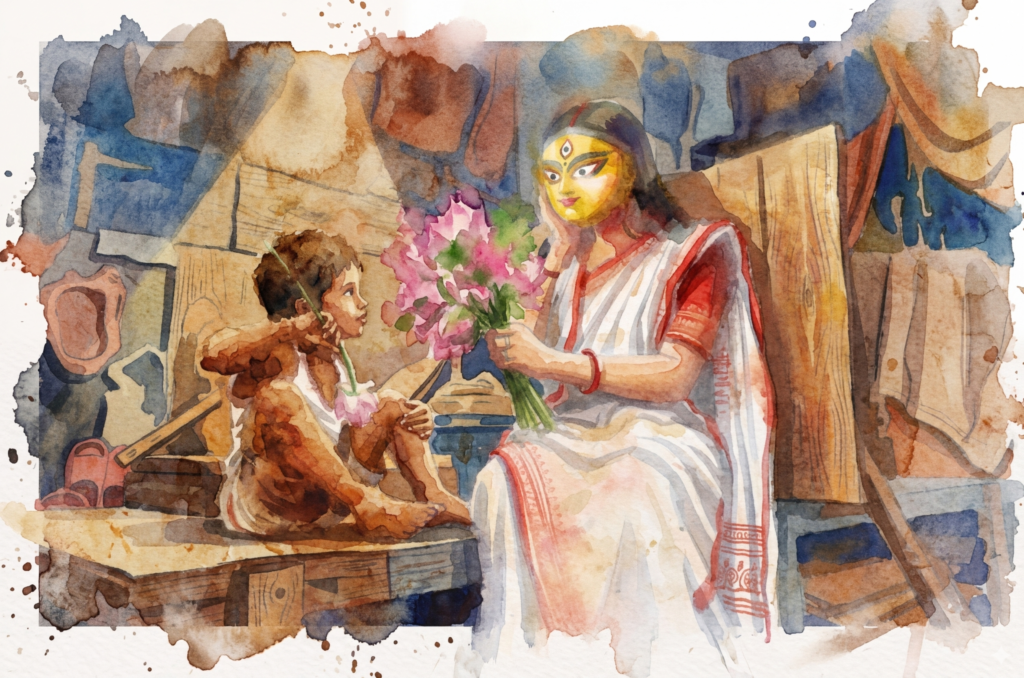
Bengal’s culture has long been marked with syncretism – a seamless binding of Hindu, Muslim, and folklore traditions that appealed across religious boundaries. It operated as fluid spirituality rather than religious identities. Yet, both the Left and the BJP have, in distinct ways, disrupted this spiritual equilibrium. The Left primarily saw religion through the lens of class and materialism, relegating faith to the private sphere. While this safeguarded secularism, it also produced an emotional void, alienating communities for whom spiritualism was embedded in everyday life. The BJP, in turn, has strategically weaponized this vacuum, turning Bengal’s inclusivity into an instrument of polarization. While the Left during its tenure used Durga Puja to display Soviet arts, culture and its literature and promoted anti-imperialist struggles across the globe, the BJP has recast it in overtly communal tones, while historical events like the Noakhali Riots and Direct Action Day are invoked to construct an image of Hindu victimhood. By juxtaposing these with the contemporary plight of Hindus in Bangladesh, the BJP attempts to project Bengal as a part of a larger religious-civilizational struggle.
A centralized cultural state
The cultural struggle in Bengal cannot be isolated from the growing centralization of cultural apparatus under the BJP’s rule at the national level. The BJP’s project is not just limited to electoral politics; it seeks to reconstruct a unitary cultural state in which regional diversity is subordinated to a singular notion of national identity defined by Hindutva.
Through institutional centralization, the BJP has widened its control over universities, school curricula, and cultural bodies like the Indian Council for Cultural Relations (ICCR) and the Sahitya Academy. Educational reforms under the National Education Policy (NEP) and the introduction of “Indian Knowledge Systems” (IKS) have privileged the North Indian and Brahminical narratives while marginalizing Bengal’s own radical intellectual lineage. This has been evident from the BJP’s alleged denial and glorification of sati (Pti, 2023), the denouncement of Raja Ram Mohan Roy as a “British stooge” by many Hindu nationalist influencers (Sen, 2019), and the controversial vandalizing of a statue of Ishwar Chandra Vidyasagar (Bhattacharya & Bhattacharya, 2019).
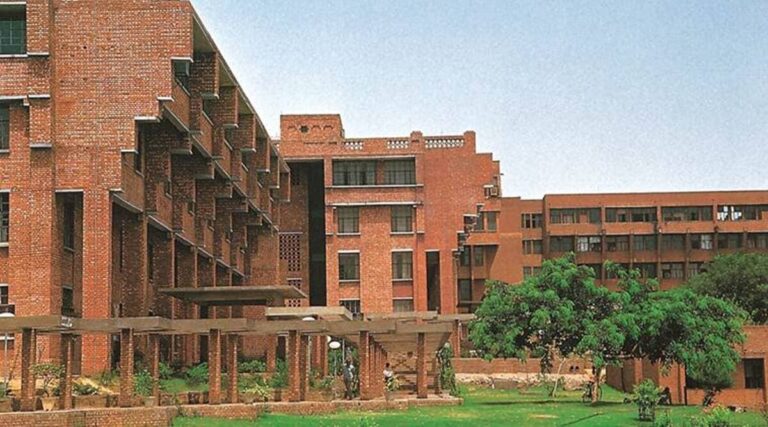
In a recent controversy in Assam, the singing of “Amar Sonar Bangla” (My Beloved Bengal), composed by Rabindranath Tagore in the aftermath of Lord Curzon’s 1905 Partition of Bengal, faced vilification. The song, which holds deep emotional significance for the Bengalis and also serves as the national anthem of Bangladesh, became a target amid growing anti-Bangladeshi sentiments in the region. The Communist Party of India (Marxist) in West Bengal protested against it by singing the song in various protest sabhas held on 4th November 2025. (Sarkar, 2025) Besides this, the appointment of centrally aligned Vice-Chancellors and the political interference in institutions like Viswa-Bharati University, once envisioned by Tagore as a cosmopolitan, pluralist space, illustrate the ongoing erosion of Bengal’s intellectual sovereignty. For another instance, Jadavpur University has been repeatedly tagged as a university breeding ‘anti-nationals’ by Hindu nationalist influencers, echoed by the Bengal BJP leaders and its allied mass media. (Singh, 2025) This conflict between the state government and the Centre over the control of universities, appointments, and funding is thus not merely administrative – it is epistemic, reflecting a struggle over who defines political knowledge and its culture.
For decades, the Left Front treated cultural autonomy as an extension of political self-determination, fostering a decentralized cultural ecosystem through people’s theatre, literature, and education. For instance, ex-Chief Minister Buddhadeb Bhattacharya had long emphasised upon importance of cinema and literature in the progressive political culture of Bengal. (Desk, 2024) The BJP’s model, however, replaces this plurality with a vertical order of cultural authority, where dissent is branded as either ‘anti-Hindu’ or ‘anti-national’. In this sense, the centralized cultural state represents not only a political imposition but a profound threat to Bengal’s intellectual sovereignty and its tradition of democratic cultural expression.
Bengal elections
The BJP’s election strategy in Bengal is therefore deeply rooted in ideological transformation rather than mere mobilization of votes. Through its ideological commitment, it builds an effort to attract the upper-caste Hindus, while through its realpolitik lens, it has also leveraged support from the lower-caste Hindus and tribal population too, like the Matuas and Namashudras, who had fled persecution from Bangladesh and have been promised fast citizenship through the Citizenship Amendment Act (CAA). (Kumar et al., 2021) Recognizing that Bengal’s political culture has long been anchored to secularism, intellectualism, and Marxist traditions, the BJP has sought to redefine cultural and political symbols to align with its Hinduva narrative. Its campaign blends religious symbolism, historical revisionism, and populist nationalism – turning elections into a referendum on identity rather than policy.
A key component of this strategy is the localization of Hindutva, or the ‘vernacularization of ideology’. The BJP, thus, attempts to recast regional icons – Tagore, Bose, and Vivekananda – as champions of nationalist and Hindu pride, thereby infusing Hindutva into Bengal’s emotional and cultural vocabulary. Simultaneously, it employs victimhood narratives – invoking Partition trauma, migration issues, and the plight of Hindus in Bangladesh – to construct a sense of communal insecurity and rally Hindu consolidation. In incidents such as Sandeshkhali, BJP leaders sought to find a ‘Hindu angle’ to the allegations of sexual assault against a Muslim MP of the Trinamool Congress, reframing a fundamental gendered political violence into a narrow communal narrative. (Kumari, 2024) This reframing shifted the focus from the systematic issue of women’s vulnerability in political spaces to a polarizing discourse of religious identity and victimhood.
Specters of 34 years
Though the Left Front today holds no seat in the West Bengal Assembly, its ideological shadows continue to haunt the BJP and its larger Hindutva project. (Gupta, 2021) The BJP’s persistent attack on the Left – invoking its “34 years of misrule” or its “aesthetic politics” – reveals not only irrelevance but residual fear. The Left remains the unspoken ideological rival that once defined Bengal’s moral and political grammar: rationalism, secularism, and class consciousness.
For three decades, the Left shaped Bengal’s intellectual infrastructure – its universities, trade unions, and cultural collectives – embedding a culture of critique that still resists the BJP’s moral majoritarianism. Even in decline, its ideas survive through student movements like Hok Kolorob and Insaaf Yatra, through feminist movements like Raat Dokhol, and through regular workers’ strikes, which continue to challenge religious polarization. The BJP’s constant vilification of communism, often linking it with anti-nationalism, is thus an attempt to exorcise a ghost that still influences Bengal’s political imagination.
The Left may no longer command electoral power, but its ideological legacy endures as a counter-hegemonic presence, reminding Bengal of a time when politics was driven by reason, not religion; by solidarity, not sectarianism. In that sense, the BJP’s cultural invasion remains incomplete – haunted by the Left’s unfinished revolution.
References
- Mukherjee, I. (2019, November 29). The historical roots of Hindu majoritarianism in West Bengal. The Caravan. https://caravanmagazine.in/politics/historical-roots-of-hindu-majoritarianism-in-west-bengal
- Vardhan, H., & Vardhan, H. (2023, March 17). Here’s how the BJP is appropriating Rabindranath Tagore | Madras Courier. Madras Courier. https://madrascourier.com/opinion/heres-how-the-bjp-is-appropriating-ravindranath-tagore/
- Pti. (2023, February 7). Parliament Budget Session | Uproar in Lok Sabha as opposition accuses a BJP member of glorifying the banned practice of ‘Sati.’ The Hindu. https://www.thehindu.com/news/national/parliament-budget-session-lok-sabha-adjourns-briefly-over-sati-remarks-by-bjp-leader-cp-joshi/article66480961.ece
- Sen, A. P. (2019, May 29). Raja Rammohan Roy was very much a Hindu – The Wire. The Wire. https://thewire.in/history/raja-rammohan-roy-was-very-much-a-hindu
- Bhattacharya, S., & Bhattacharya, S. (2019, May 15). Vidyasagar statue vandalism in Bengal isn’t just about ideology. It’s a TMC-BJP power war. ThePrint. https://theprint.in/opinion/vidyasagar-statue-vandalism-in-bengal-isnt-just-about-ideology-its-a-tmc-bjp-power-war/235960/
- Sarkar, J. (2025, November 4). BJPs attack over Congress leader singing Tagores Amar Shonar Bangla in Assam proves costly in Bengal. The Wire. https://m.thewire.in/article/communalism/bjps-attack-over-congress-leader-singing-tagores-amar-shonar-bangla-in-assam-hits-back-in-bengal/amp
- Singh, S. S. (2025, March 9). BJP calls Jadavpur University a ‘hub of anti-nationals’, blames Trinamool for the impasse. The Hindu. https://www.thehindu.com/news/cities/kolkata/bjp-calls-jadavpur-university-a-hub-of-anti-nationals-blames-trinamool-for-the-impasse/article69310384.ece
- Desk, T. C. (2024, August 8). The Marxist journey of “Brand Buddha” Buddhadeb Bhattacharjee. The Times of India. https://timesofindia.indiatimes.com/city/kolkata/left-behind-the-marxist-journey-of-brand-buddha-buddhadeb-bhattacharjee/articleshow/112366309.cms
- Kumar, A., Majumdar, M., & Kumar, A. (2021, March 12). Namasudras are getting closer to BJP in West Bengal. There is a tradeoff. ThePrint. https://theprint.in/opinion/namasudras-are-getting-closer-to-bjp-in-west-bengal-there-is-a-tradeoff/620141/
- Kumari, A. (2024, February 19). BJP MP Locket Chatterjee accuses TMC of targeting Hindu women in Sandeshkhali | Kolkata. Hindustan Times. https://www.hindustantimes.com/cities/kolkata-news/bjp-mp-locket-chatterjee-accuses-tmc-of-targeting-hindu-women-in-sandeshkhali-101708334624855.html
- Gupta, M. (2021, March 14). We cannot ignore the left’s role in fostering soft Hinduisation in Bengal. The Wire. https://m.thewire.in/article/politics/bengal-elections-tmc-cpim-appeasement-politics
Featured Image Credits: Pexels

 Login
Login
Very well written!
Long live the Bengal and it’s liberated minds